

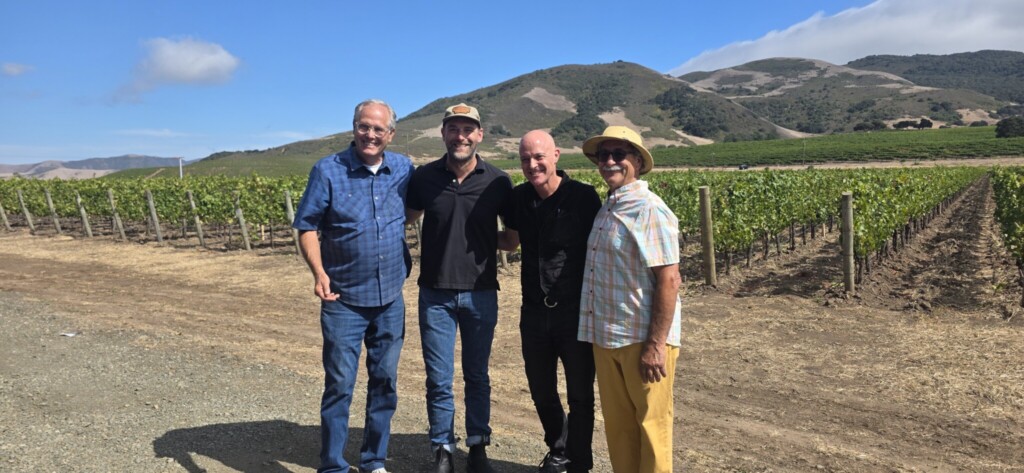
27 Aug A Taste of Time: A Sta. Rita Hills Retrospective
“Think about a flower,” Greg Brewer said. “Do you like it freshly picked? Or do you prefer it after it opens a day or two later?”
Brewer, always eloquent, used the analogy to talk about wine. Wine can be great when it is first opened. Or it can simply change and evolve over the years yet still be good. Aging wine, Brewer said, “punctuates time elapsing.”
That idea resonated with me because I have a lot of wine at home, and I often wonder if I have waited too long to drink some of it.
Most people go to a store, buy a bottle of wine, and consume it within a few hours or days. Most people go to a store, buy a bottle of wine, and consume it within a few hours or days. But when you work in wine, bottles tend to accumulate.
I am not an intentional wine collector. I started working in wine in 2001, and over the years, I have accumulated wines without necessarily intending to. I have purchased bottles. I have been given bottles. I have had bottles left over after events. They were all wines I fully intended to drink. But then more wines came. Samples arrived for stories. Wines arrived for virtual tastings. And while I tried to clear the bottles off my table and kitchen counter, the wines already tucked away in my four wine fridges were forgotten.
Every once in a while, I look through those fridges and wonder: Did I miss the drinking point? Will these wines still be good?
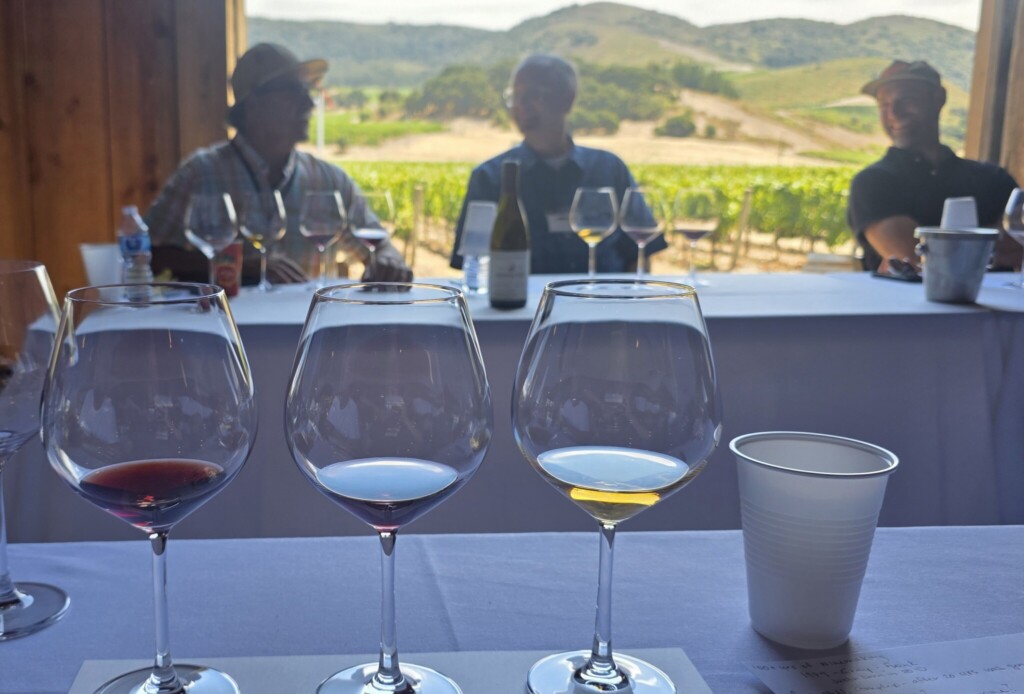
Of course, aged wine can taste different. And different can be good. But not all wines are meant to age. Luckily, if it is a Pinot Noir or Chardonnay, a Syrah or another grape from the Sta. Rita Hills AVA, it likely has aging potential. And I can say this after experiencing it firsthand at a retrospective tasting during the 25th annual Sta. Rita Hills Wine & Fire.
The panel brought together Frank Ostini and Gray Hartley of Hitching Post Wines, Greg Brewer of Brewer-Clifton, and Justin Willett of Tyler Winery. Representing three generations – Boomers, Gen X, and Millennials – they brought more than 100 years of combined winemaking experience to the table.
The question was: Can Sta. Rita Hills wines age? And why?
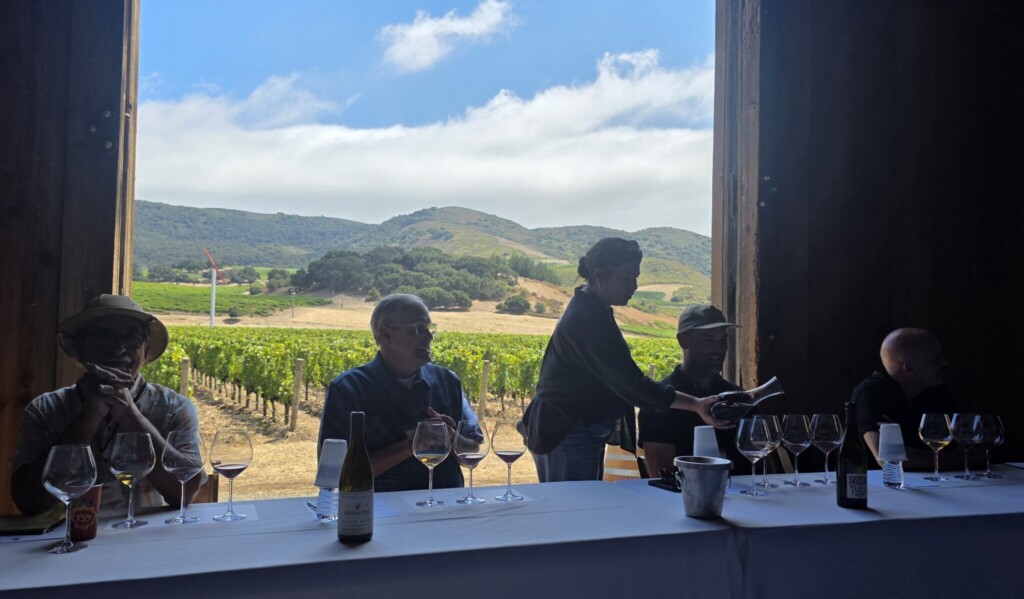
Justin Willett of Tyler Winery noted that there are “few places that can do this aging.” He pointed to the confluence of “refrigerated sunlight,” a long growing season that gives full, ripe fruit, marine sediment soils, the east-west valley, diatomaceous earth, and lots of acidity.
And then we had the opportunity to taste aged wines from the Sta. Rita Hills and see for ourselves.
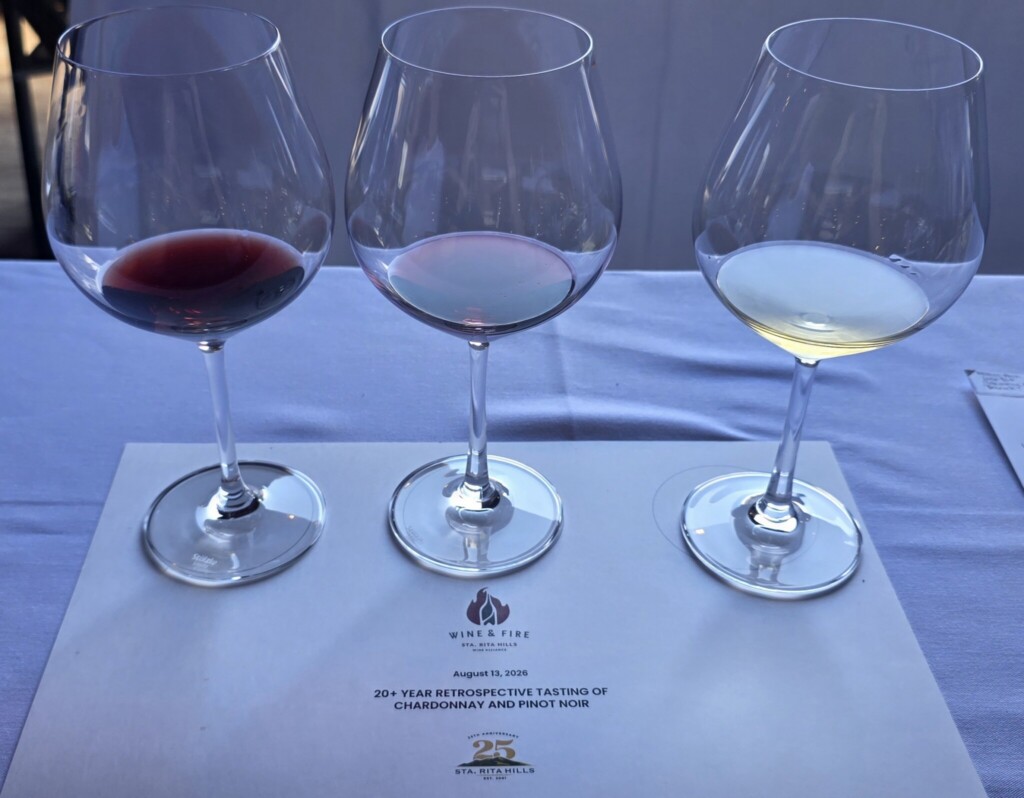
Flight One
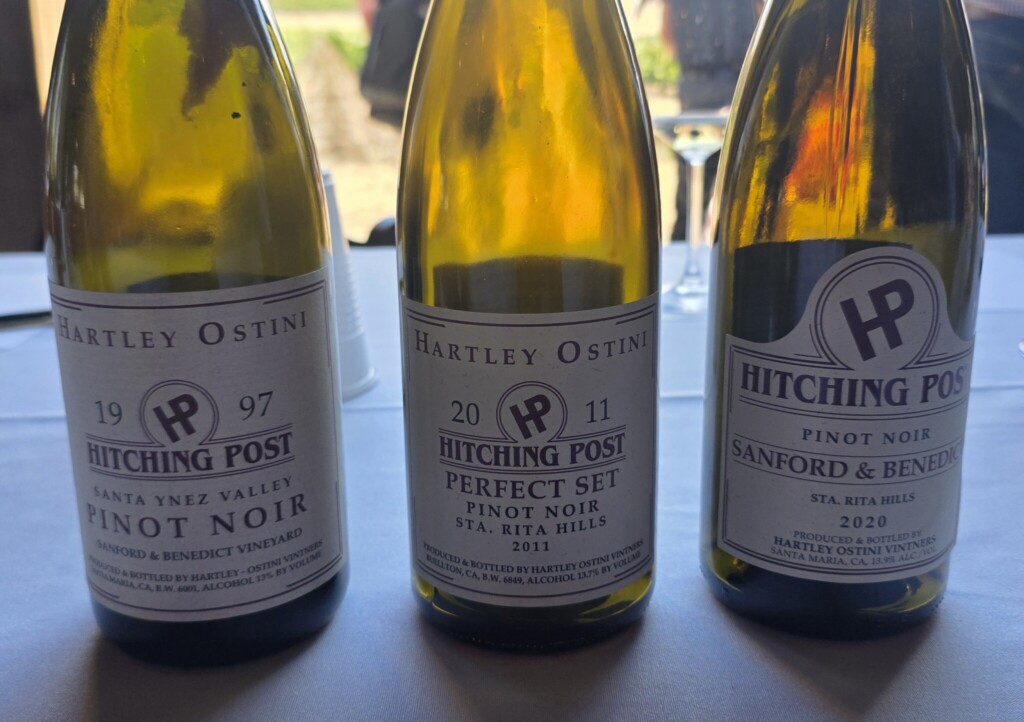
1997 Hitching Post Sanford & Benedict Pinot Noir
Sanford & Benedict Vineyard was planted in 1972 by Richard Sanford. Hitching Post started in 1981 with Sierra Madre Vineyard and first received grapes from Sanford & Benedict in 1985. The 1997 vintage was a big harvest, and the vineyard had been irrigated after being dry farmed. More than 25 years later, the wine offered dried red fruits and savory brown spices.
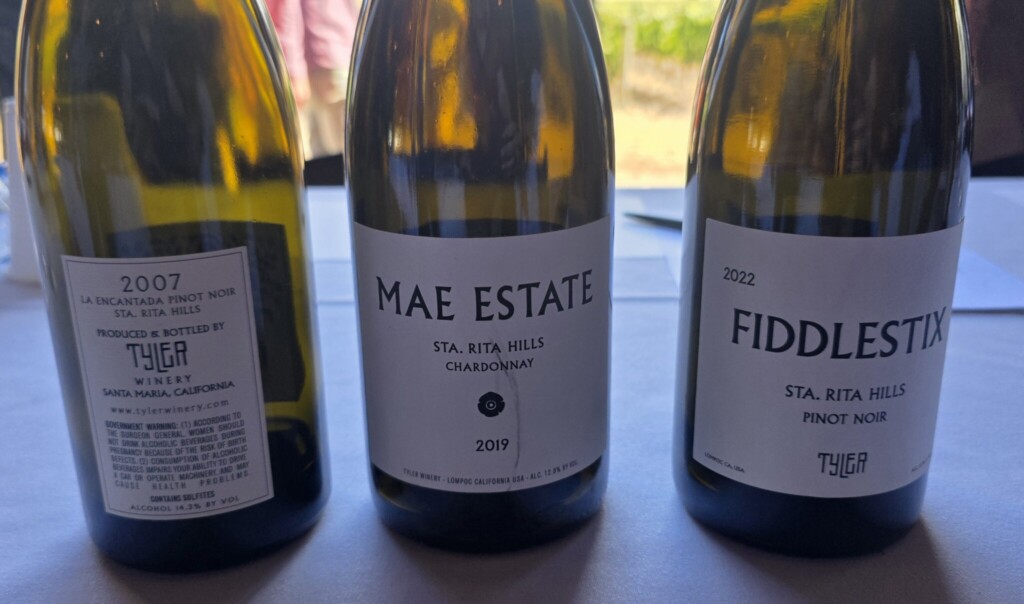
2007 Tyler La Encantada Pinot Noir
La Encantada was also planted by Richard Sanford. The wine came from a hot, low-yield year and showed bright acidity, dark red fruits, and spice. It was rich and dark yet still had primary fruit. My tasting notes said, “Wow!”
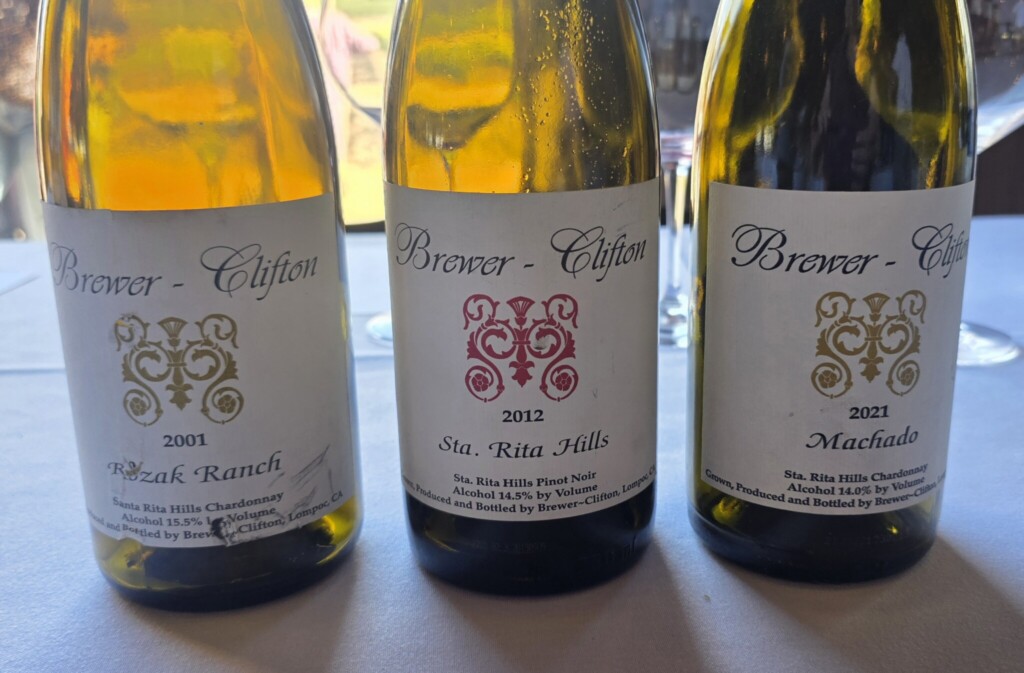
2001 Brewer-Clifton Rozak Ranch Chardonnay
Brewer-Clifton started in 1996. Rozak Ranch was up Gypsy Canyon, but the vineyard no longer exists. The Chardonnay did not undergo malolactic fermentation and saw 10 percent new oak. There were aromas of nuts and ripe red apple, with vibrancy and texture on the palate and minerality on the finish.
Flight Two
2011 Hitching Post Perfect Set Sta. Rita Hills Pinot Noir
Dried fruit aromas led into ripe strawberry and textured tannins.
2012 Brewer-Clifton Sta. Rita Hills Pinot Noir
This wine was named number eight in Wine Spectator’s Top 10 in 2015, the first Sta. Rita Hills wine on the list. More than a decade later, there were ripe cherry aromas, and the wine was still youthful with structured tannins.
2019 Tyler Mae Chardonnay
This was the first vintage from Justin Willett’s estate Mae Vineyard, which he planted from scratch in 2017. The wine showed lots of minerality and delicate floral notes. It broadened on the palate while maintaining a structural line down the center.
Flight Three
2020 Hitching Post Sanford & Benedict Pinot Noir
Lively and textured, with cherry and raspberry notes, balance, and a juicy finish.
2022 Tyler Fiddlestix Pinot Noir
This was the first year Justin was farming Fiddlestix after buying it in the fall of 2021. The vineyard has diverse clone and rootstock selections, what he called the “31 flavors of Dijon clones.” Justin leans into whole cluster, adding another level to the wine. With natural fermentation, the wine was pure and precise. The wine was electric, with an upright structure. Structure came first, followed by textured acidity.
2021 Brewer-Clifton Machado Chardonnay
Made with two percent Gewürztraminer, I wrote one word down, “YUM!” as I was mesmerized by the textured acidity and notes of tree fruits.
Time in a Bottle
What struck me was how complex these wines remained whether they are four years old or twenty-four years old. They had gravity and substance. They had changed, but that did not mean they had passed some magical point when they should have been consumed.
And that brought me back to my wine fridges. I started looking at what I have tucked away. There are Pinot Noirs from Fiddlehead Cellars, Clos Pepe, Dragonette, Liquid Farm, The Hilt, Zotovich, Domaine de la Côte, and Hilliard Bruce, ranging from 2002 to 2019. There are Chardonnays from Brewer-Clifton, Clos Pepe, Sandhi, Zotovich, Liquid Farm, and Joy Fantastic from 2009 to 2017.
Before this tasting, I looked at those bottles with a little trepidation. Had I waited too long? Had I missed them? Now, I am excited to start opening them.
As Greg Brewer’s flower analogy reminded me, there may not be one single moment when a wine is at its best. It can taste different at different stages of its life. And perhaps the question is not whether I missed the perfect moment, but what the wine has to say when I finally open it.
Discover more from Please The Palate
Subscribe to get the latest posts sent to your email.