

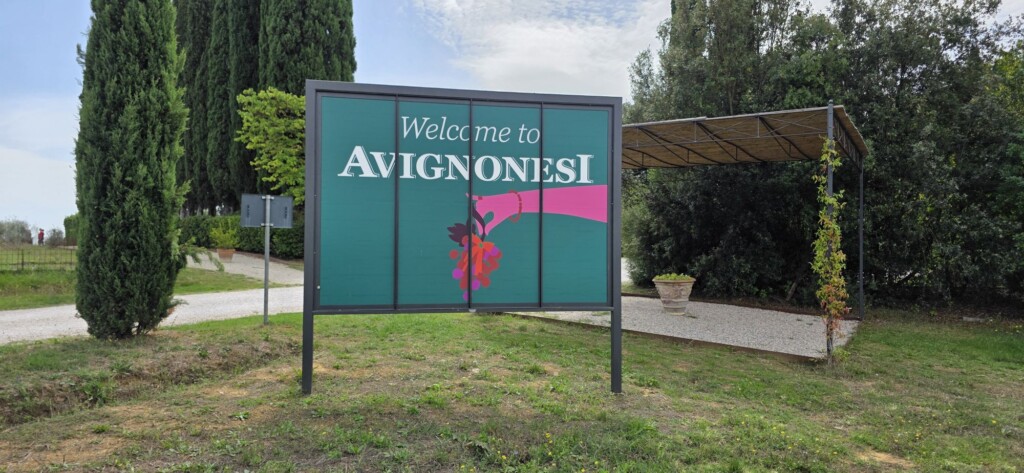
23 Sep Wine Beyond the Glass: My Two Days at Avignonesi
After a long international flight, a two-and-a-half-hour drive from Rome to Montepulciano, and only enough time for a quick shower, I was ready for my visit to Avignonesi. We immediately dove in and for the next 48 hours, there was no easing into the experience. Instead, it was a whirlwind of harvest activity, vineyard walks, vertical tastings, food pairing lunches, cooking classes, and even making gelato with wine.
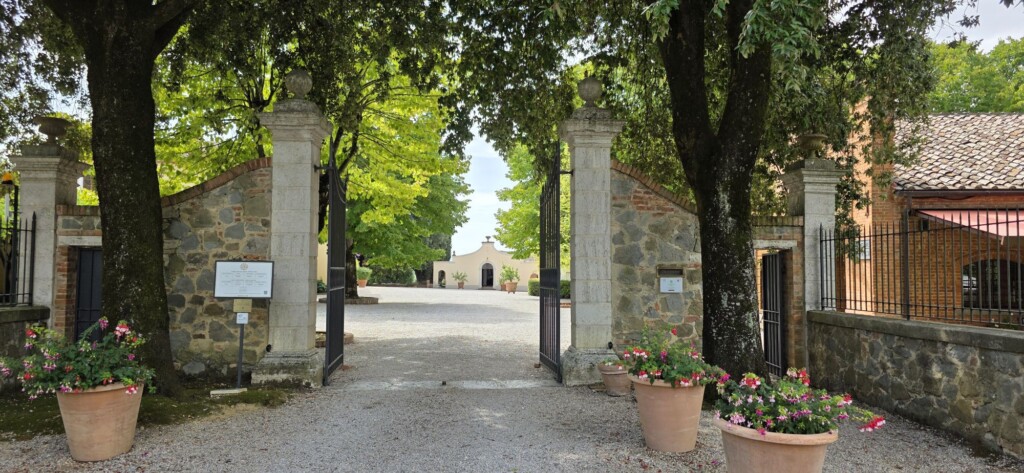
At Avignonesi, wine was integrated into everything I did. From the soil in the vineyards to the goose on my plate, from the amphora-aged whites to the legendary Vin Santo, I was fully immersed in a philosophy of farming and hospitality that goes far beyond the glass.
A Winery with Deep Roots
Avignonesi is one of Montepulciano’s largest and most historic wineries, with origins dating back to the late 1960s when the Falvo family purchased land. Agronomist Ettore Falvo married Adriana Avignonesi, whose family name dates back to the 16th century, and Falvo named the winery after his wife.
For decades, the winery built its reputation on Merlot and Cabernet Sauvignon alongside the native Sangiovese. But in 2009, when Belgian-born Virginie Saverys purchased Avignonesi, this shifted. Her vision was to bring the focus back to Montepulciano and its noble grape, Sangiovese (locally called Prugnolo Gentile). She grafted over vineyards, expanded holdings to nine estates spanning 175 hectares, and in 2016 achieved full organic and biodynamic certification.
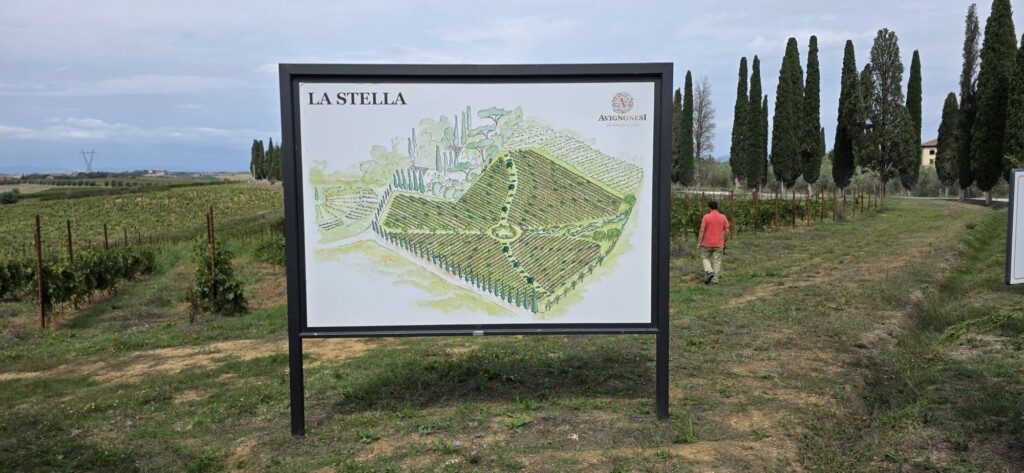
Today, Avignonesi is Biodyvin-certified, a European certification for biodynamic farming that reflects not just what happens in the vineyard, but an entire way of farming. In addition to grapes, olive oil, saffron, irises, and balsamic vinegar are all part of the estate’s agricultural cycle. Geese roam the rows to manage weeds, and sometimes, as I discovered at one meal, end up on the plate.
Farming Philosophy: Harmony with Nature
I quickly learned that Avignonesi’s philosophy is as much about listening as it is about growing. COO/Viticulturist Alessio Gorini and CEO/Winemaker Matteo Giustiniani explained that they don’t “manage” vineyards so much as work with them.
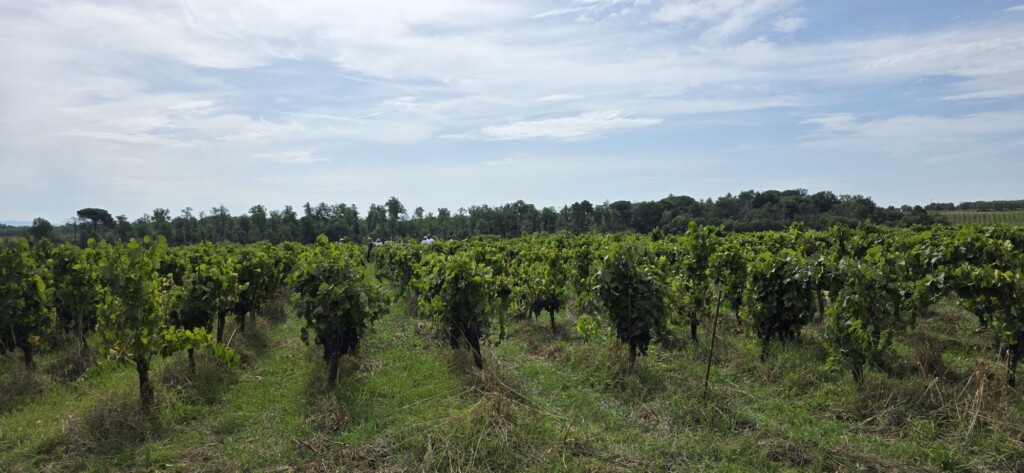
Each year, 120 separate vineyard plots are harvested and fermented individually. Native yeast carries out fermentation, with only sulfur and occasional bentonite added for fining. The quality of the grapes themselves is paramount, as no adjustments are made in the winery.
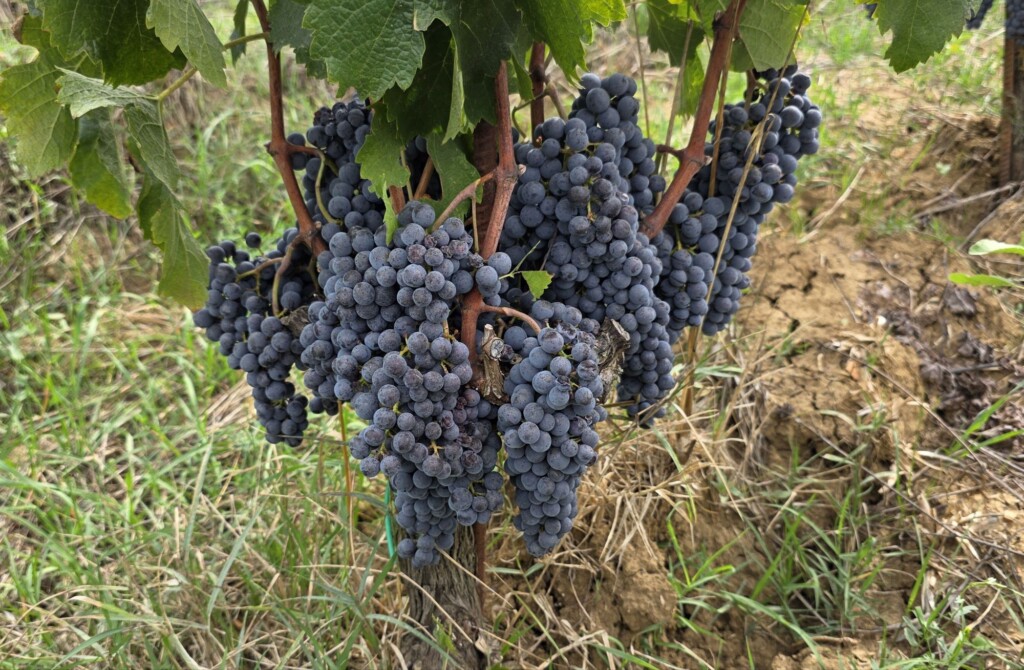
Matteo described it perfectly: “The grapes are the notes played perfectly; the winemaker is the musician.” That sense of respect for nature permeates every corner of the estate.
Tasting the Story of the Vineyards
Wine tells the story of a place and a vintage. To let the story have time to unfold, Avignonesi holds back 5–10% of their production to release later. This allows them to age some of the wines in their cellars. During my visit, I had the chance to taste several verticals that brought this philosophy to life.
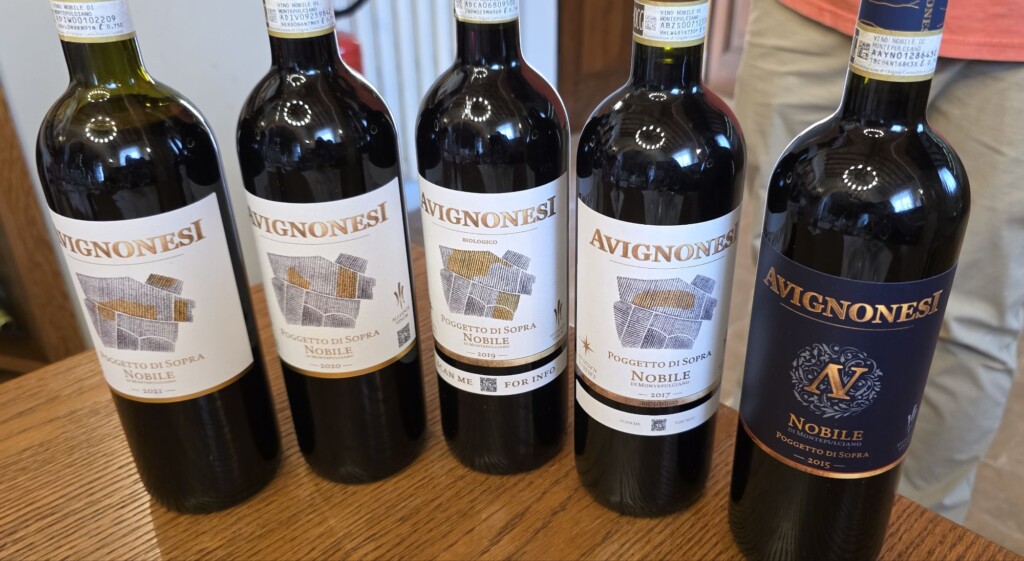
Progetto di Sopra: The Elegance of Sangiovese
This single-vineyard Vino Nobile di Montepulciano represents the some of the best of Avignonesi. Tasting a vertical from 2015 through 2021 showed just how expressive Sangiovese can be:
• 2015 – a warm year; ripe cherry, baking spice, structured tannins.
• 2017 – a dry, frost-hit vintage; dark cherry and firm, drying tannins.
• 2019 – elegant and harmonious; high yields, but balanced.
• 2020 – cold nights brought lifted aromatics.
• 2021 – dry vintage; sapid, red fruits, youthful energy.
Each glass revealed not just flavor but also the challenges and triumphs of that growing season.
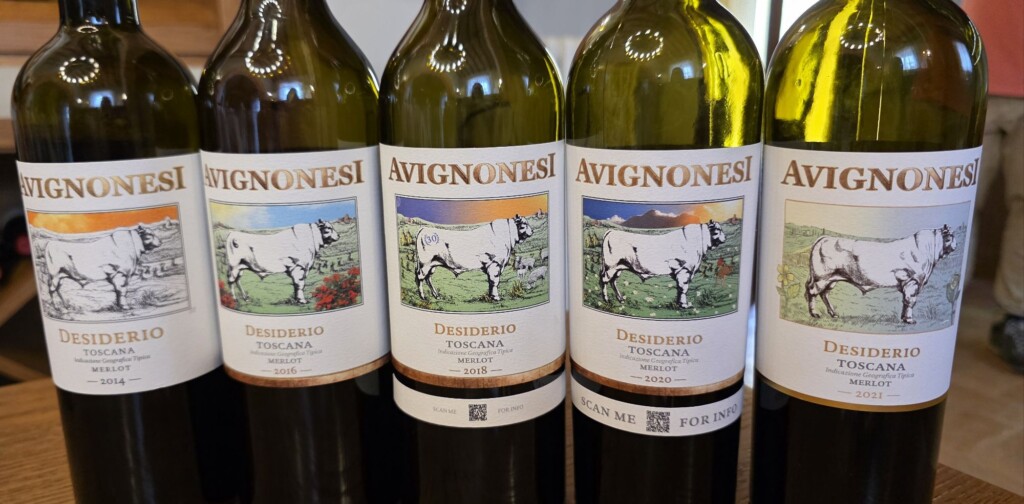
Desiderio: Tuscany’s Merlot
Named after a famous bull who once lived on the property, Desiderio was one of Tuscany’s first Merlots when it debuted in 1988. Since 2014, it has been crafted as 100% Merlot. The vertical tasting highlighted its evolution:
• 2014 – cloudy, challenging vintage.
• 2016 – humid early season, hot finish; violet and spice.
• 2018 – hot but moderated by diurnal shifts; plush and textured.
• 2021 – young, with structure and freshness.
What struck me with each vintage was the elegance of this wine, always floral, with fine tannins.
Other Expressions
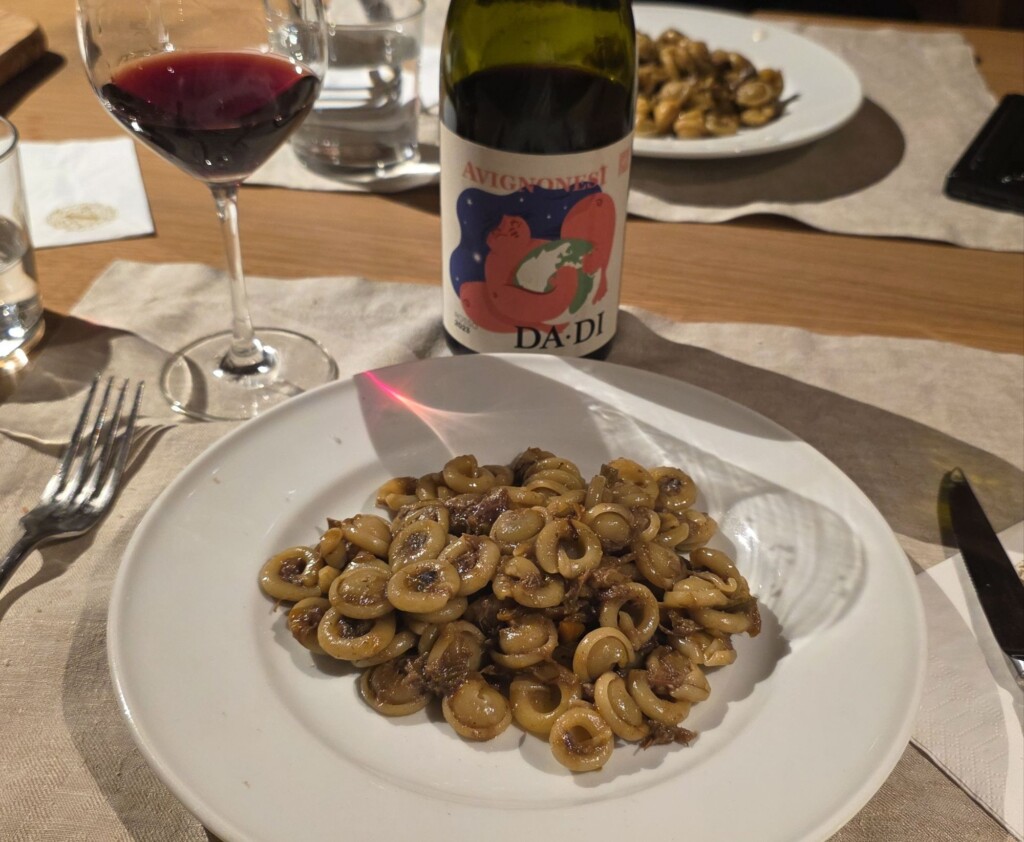
Da-Di: The name, taken from the Chinese word for terra madre (Mother Earth), reflects Avignonesi’s global outlook. The rosso is an amphora-aged red blend of 37,8% Sangiovese, 20,65% Alicante, 18,5% Canaiolo, 17,8% Mammolo, 5,25% Ciliegiolo, with raspberry, currant, cinnamon, and star anise notes and soft tannins. We enjoyed this wine with pasta with a goose sauce made from the geese on the property. There is also an amphora-aged white made from Trebbiano, Grechetto, Vermentino, and Petit Manseng.
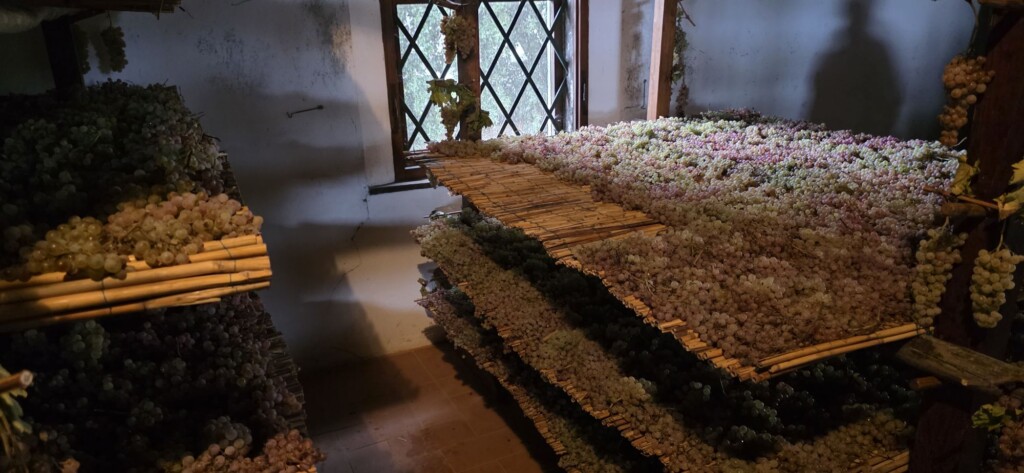
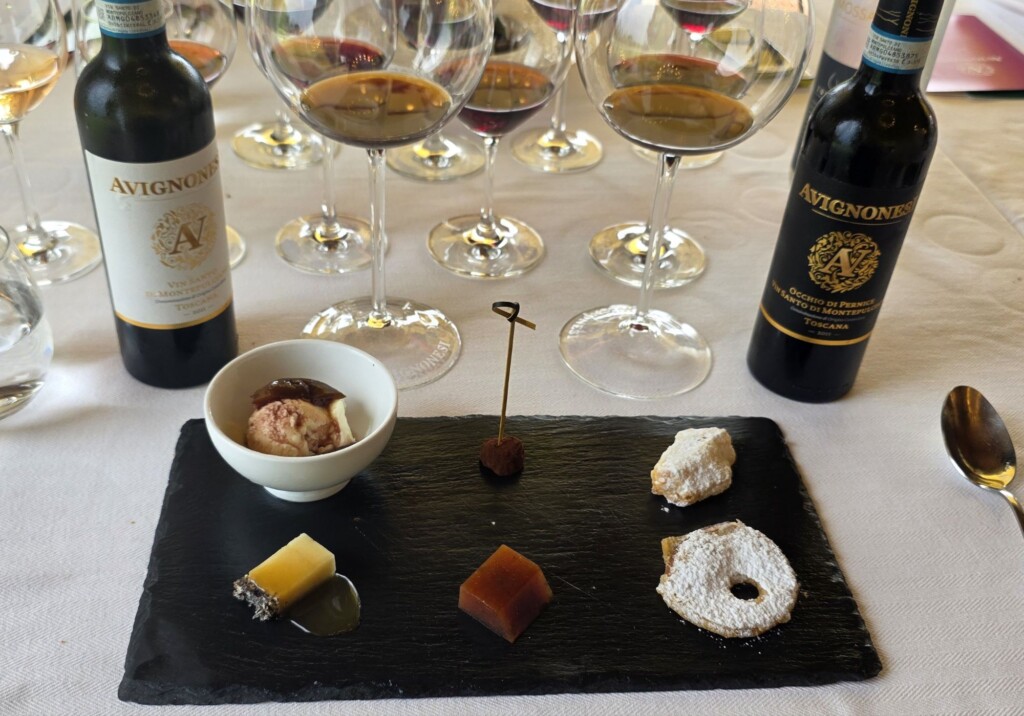
Vin Santo: A jewel of the estate, made from dried grapes and a 100-year-old mother yeast. Rich, layered, and powerful, it is one of Italy’s great sweet wines.
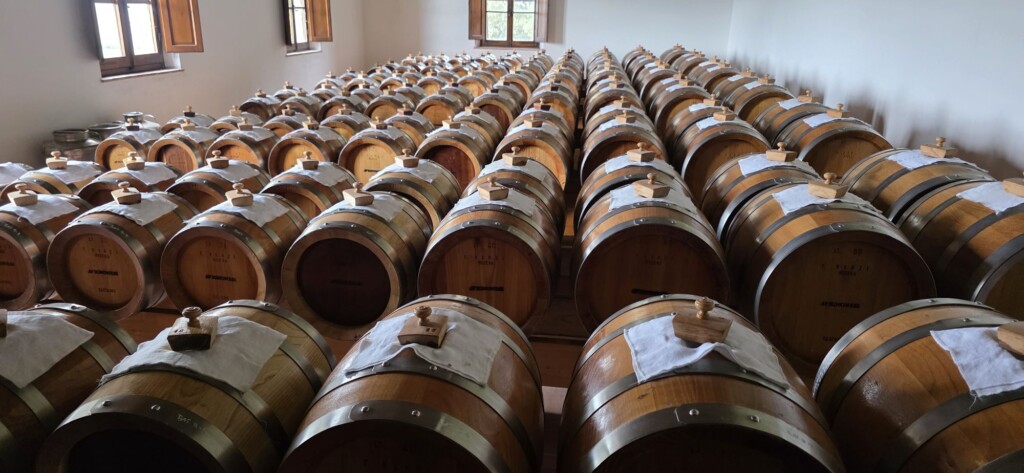
Balsamic Vinegar & Olive Oil: Not afterthoughts, but part of the farm’s holistic approach.
Living Wine Through Experiences
Avignonesi doesn’t just want visitors to taste wine, they want you to live it. Over two days, I was swept up in experiences that touched every sense:
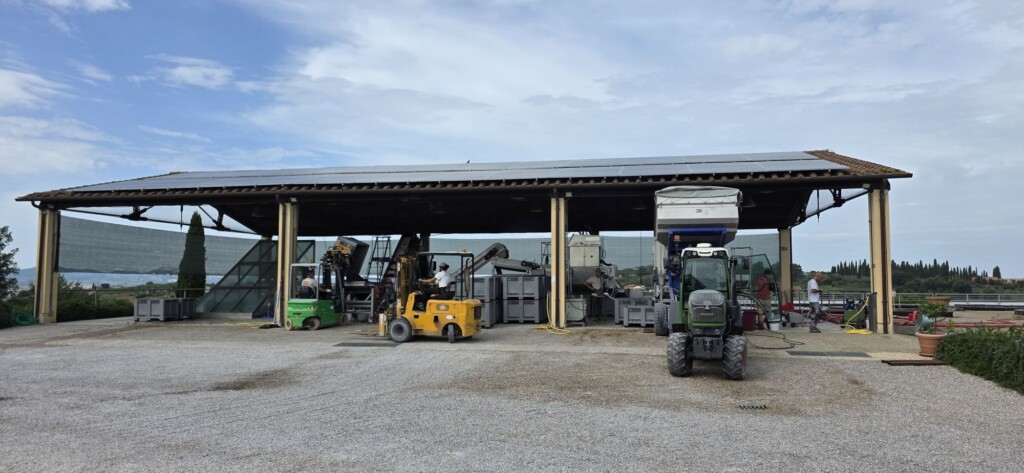
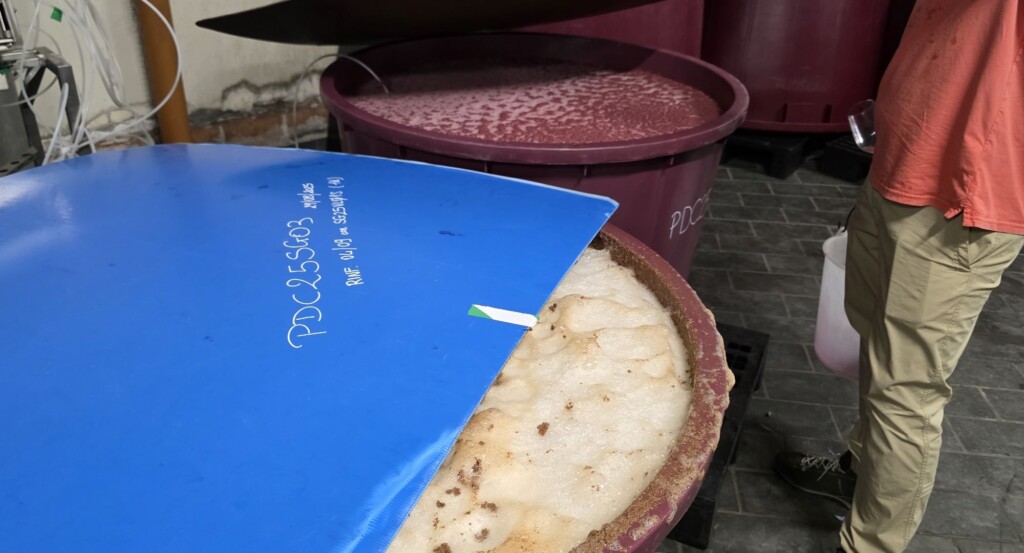
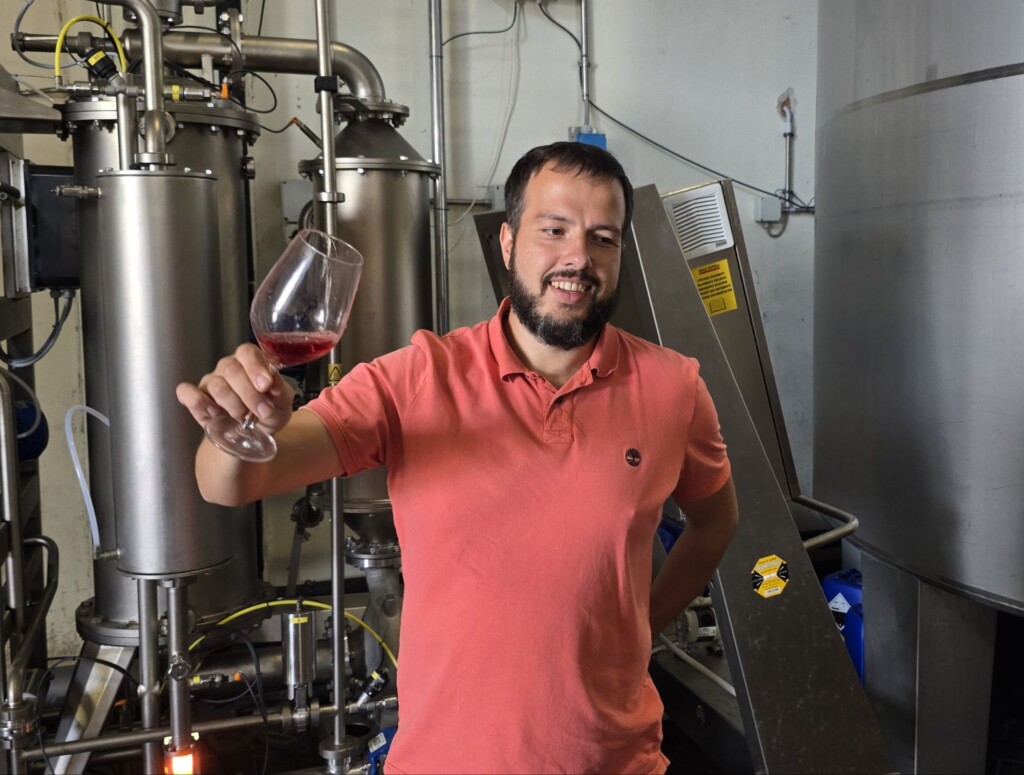
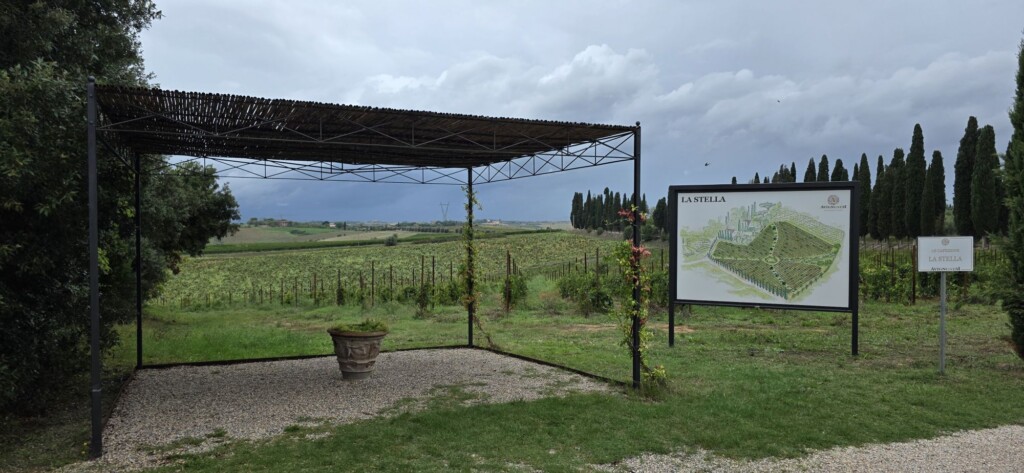
Harvest in Action: We touried the vineyards during harvest and walked through the winery where we tasted freshly pressed juice and saw them making a pied de cuve, a native starter for fermentation.
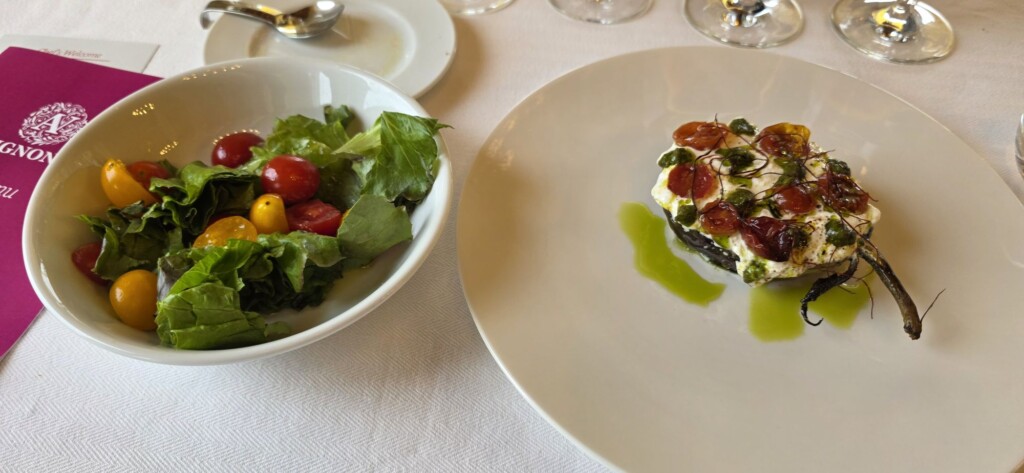
Farm-to-Table Dining: We enjoyed a multi-course food pairing lunch in their restaurant, featuring ingredients grown in Avignonesi’s own gardens.
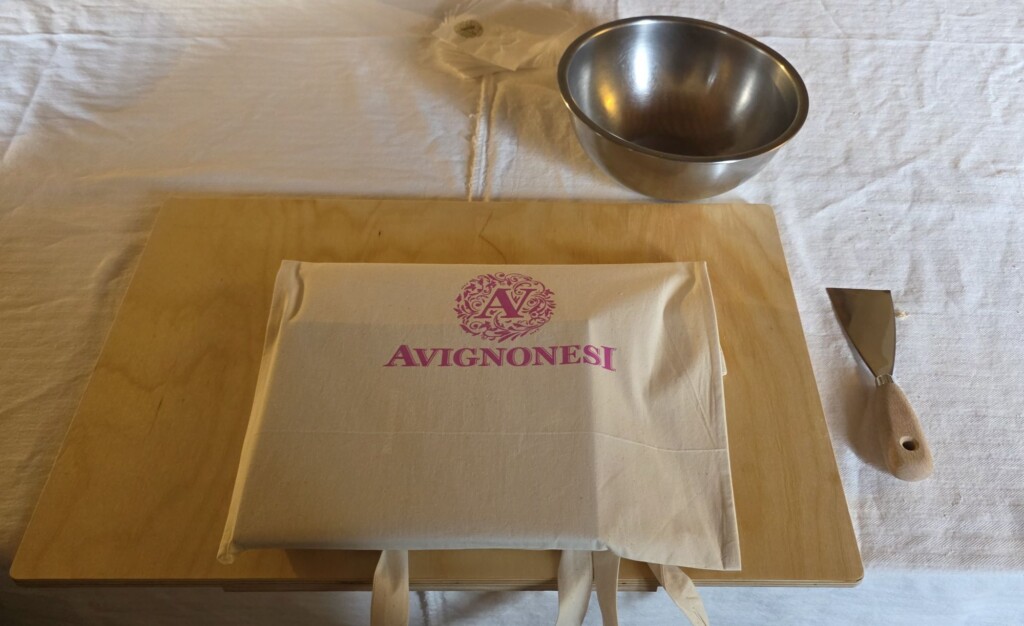
Cooking Class: We rolled pasta and prepared Tuscan classics, then enjoyed them with wines. We made panzanella with tomatoes, cucumbers, and yesterday’s bread. And we made pici all’aglione, a handmade pasta from flour and water with an elongated shape, which we rolled out by hand, and then topped with a garlic-spiked tomato sauce made with the Tuscany aglione garlic, a particular type of garlic.
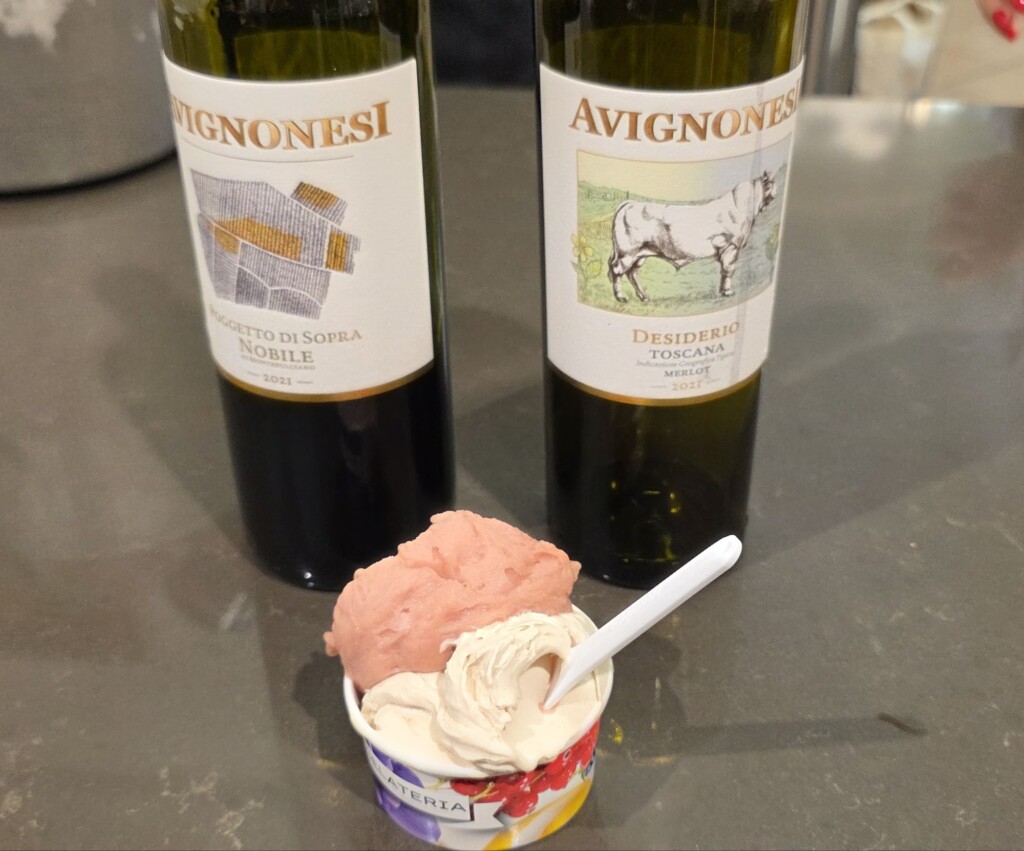
Gelato Workshop: At local gelateria Buon Gusto, we made gelato and sorbetto infused with Avignonesi wines. Not only tasty, but it is also proof that wine can be playful, too.
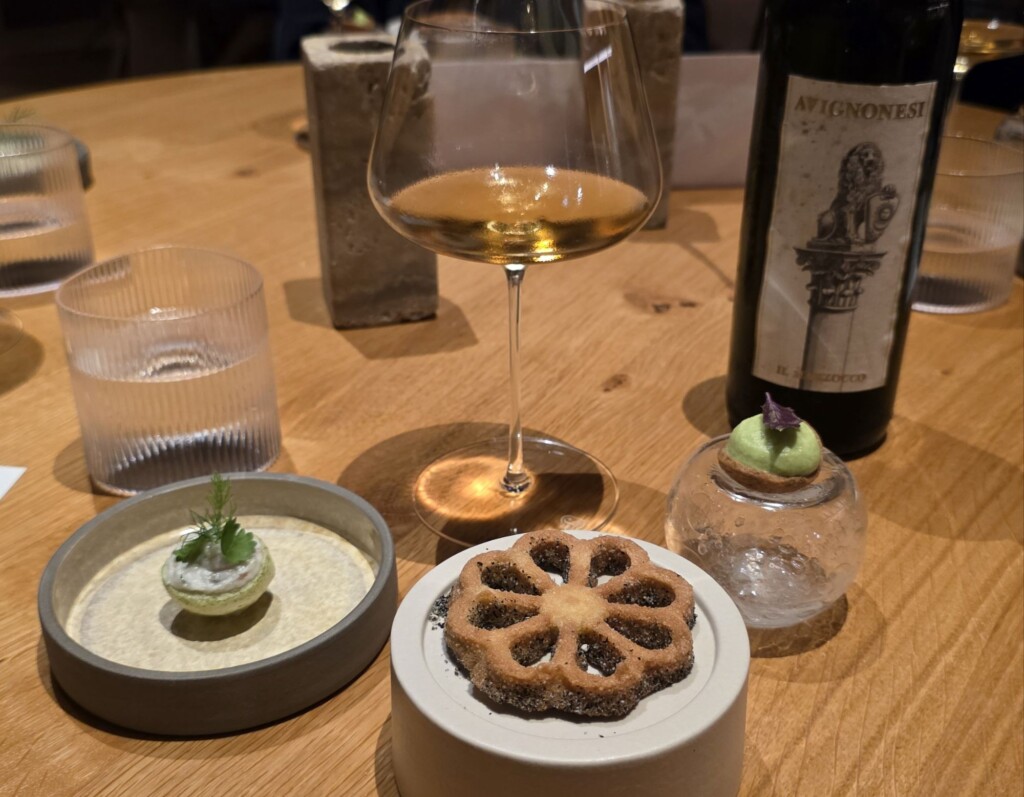
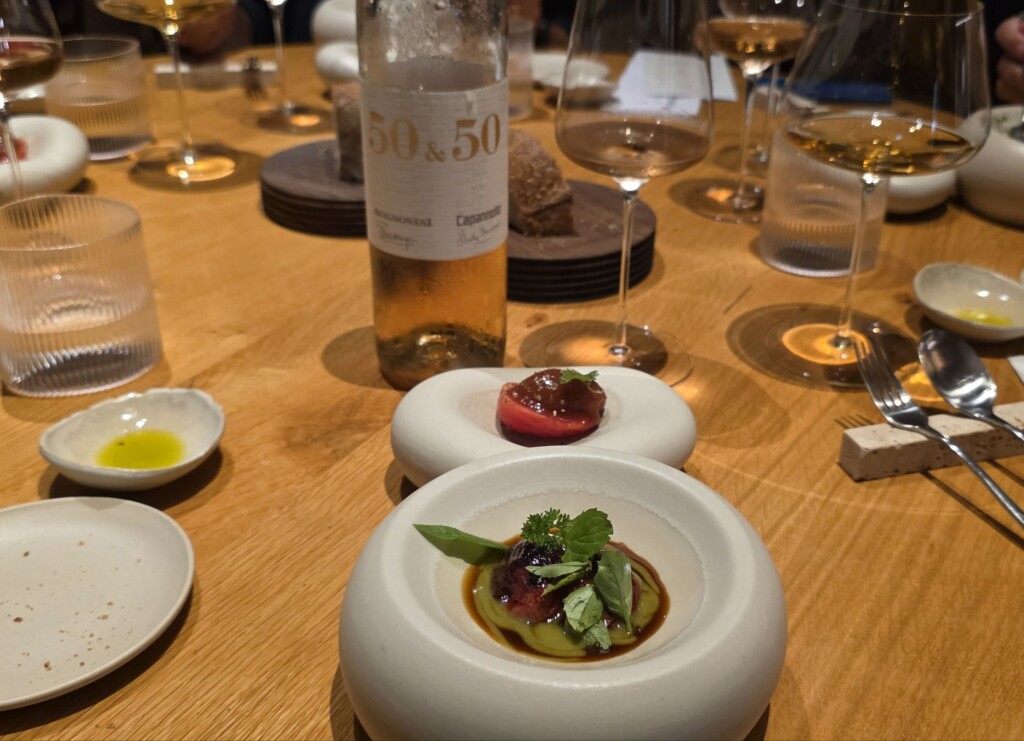
Dining Beyond the Estate: We dined at Michelin-starred Osmosi, and paired each course with Avignonesi wines, including 1989 Chardonnay, 2015 Progetto di Sopra Nobile, 2016 La Banditella single vineyard Sangiovese, and 2011 Vin Santo di Montepulciano.
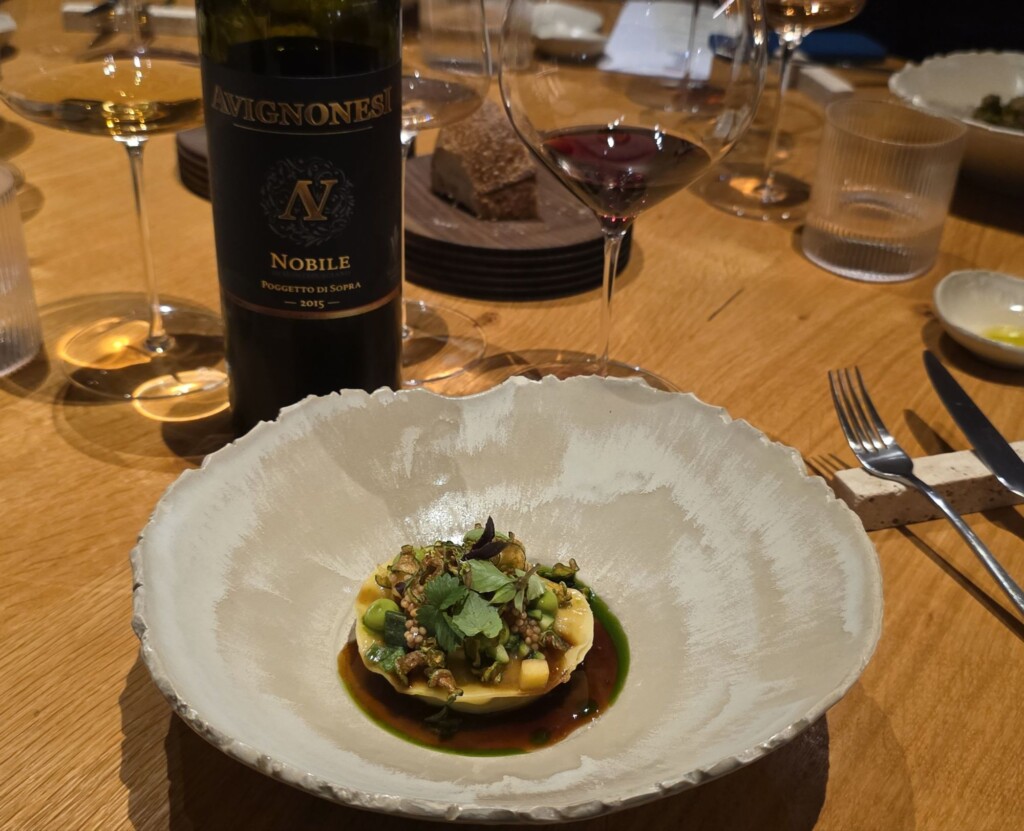
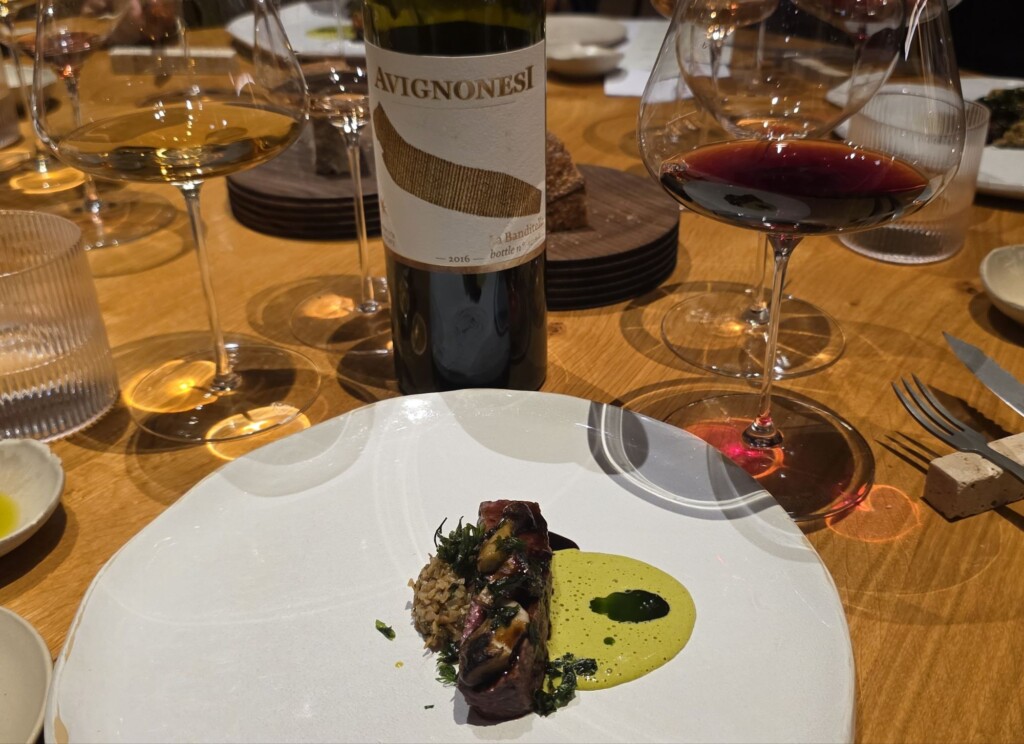
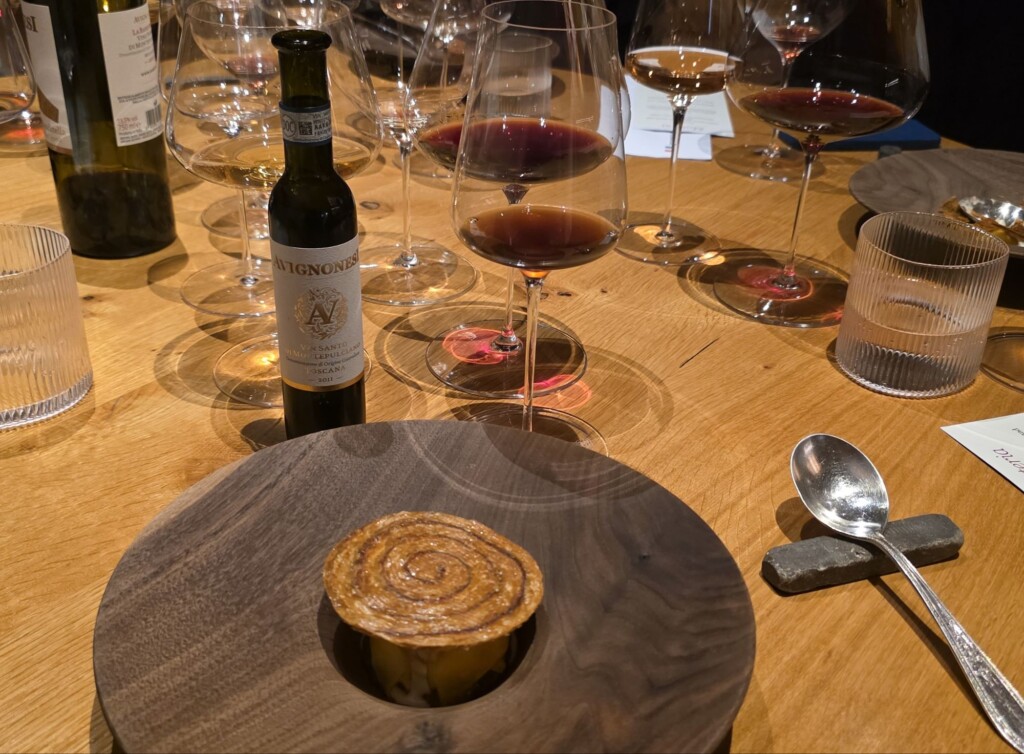
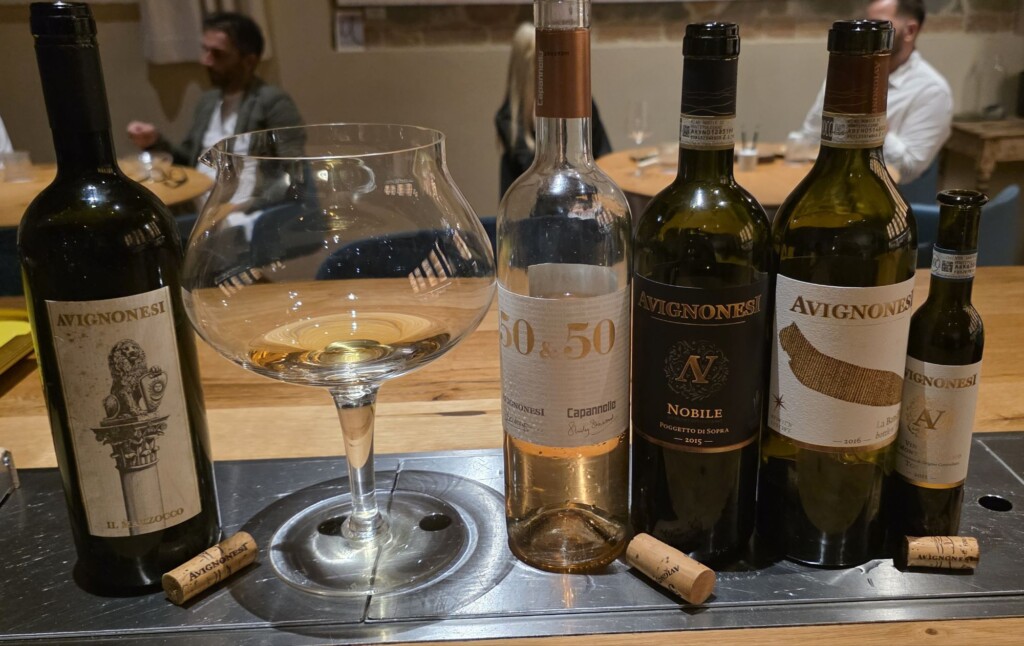
These experiences blurred the line between guest and participant. At every turn, I felt part of the Avignonesi family.
Reflections: Wine Beyond the Glass
When I look back on those two days, I don’t think of them as a checklist of tastings or tours. I think of them as a story, of people working in harmony with the land, of a winery that honors both tradition and innovation, and of a philosophy that wine should be experienced through food, farming, and community. And above all, a team of people who share a common passion and made me feel like a welcome member.
Avignonesi reminded me that the best winery visits are about more than what is in your glass. They’re about living the culture of wine, embracing all the details that shape it, and walking away with a sense of connection.
For 48 hours, I lived wine in a way I will never forget. And that is what makes Avignonesi unforgettable.
Discover more from Please The Palate
Subscribe to get the latest posts sent to your email.