

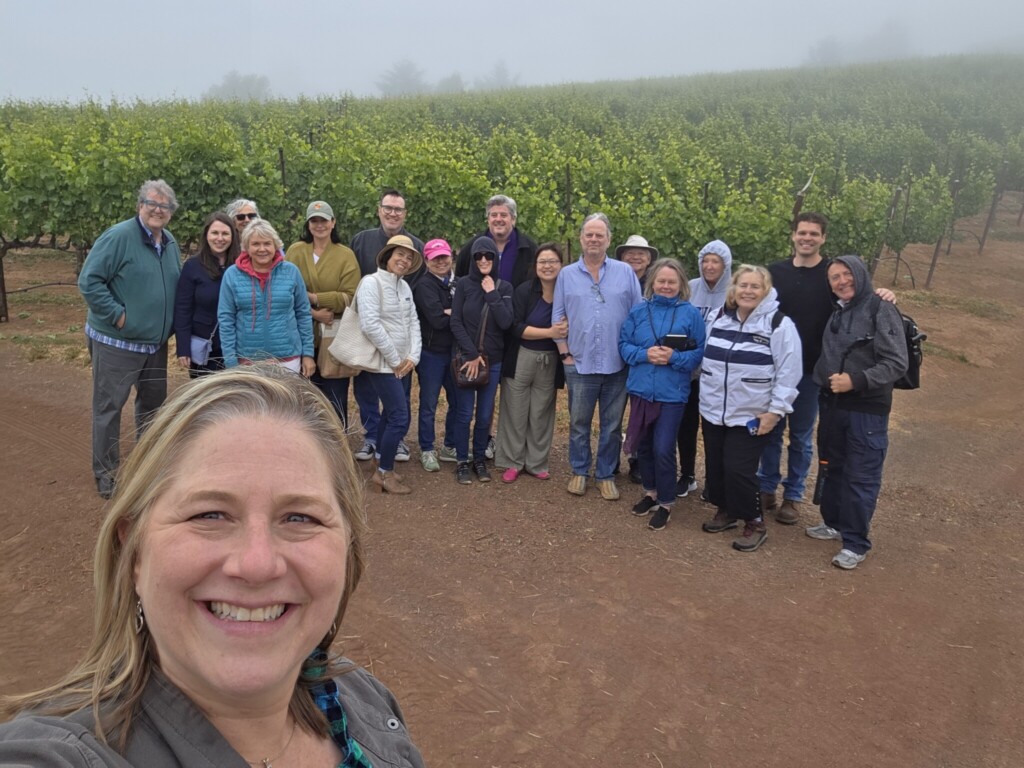
09 Sep Into the Fog: A Visit to Fort Ross Vineyard
A couple of months have passed since my visit to Fort Ross Vineyard in the Fort Ross-Seaview AVA, yet the memory clings to me like the fog that blanketed the winding road that day. We left Santa Rosa in the bright summer sunshine, only to find ourselves enveloped in a cool, almost damp mist as we climbed toward one of Sonoma County’s most remote and atmospheric wine regions. Fort Ross Vineyard feels like a world apart and the experience left an impression that has lingered, urging me to share the story of this hidden place on the edge of the Pacific.
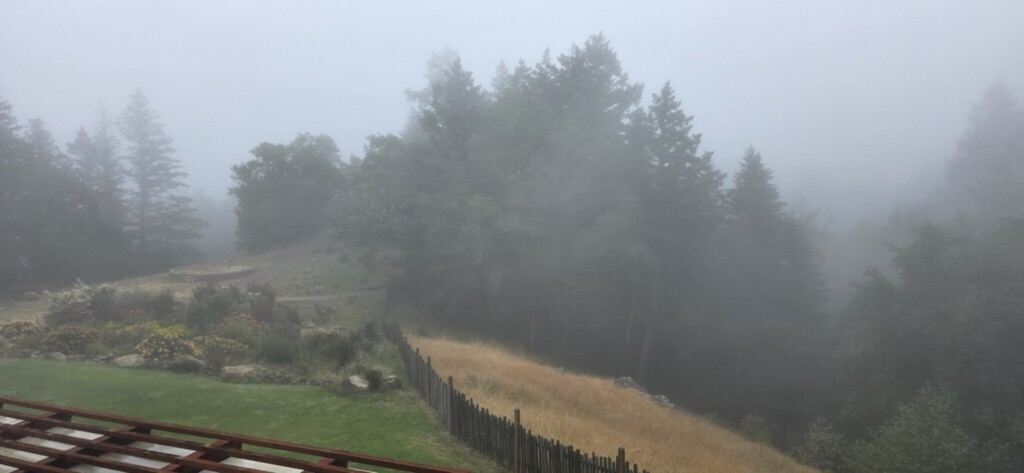
Fort Ross-Seaview’s remoteness is only part of its allure. The first winegrapes in Sonoma County were planted here in 1817 by the fur-trading Russian-American Company’s outpost at Fort Ross. Modern winemaking, however, did not begin until 1973. Today, the climate is ideally suited to Pinot Noir and Chardonnay, the region’s most popular grapes.
Perched between 1,200 and 1,800 feet in elevation, Fort Ross-Seaview is the closest vineyard land in Sonoma to the Pacific Ocean, making it one of the county’s coolest and foggiest areas. Above Fort Ross State Historic Park, the AVA was officially carved out of the larger Sonoma Coast in 2011, defined by its soaring elevation and rugged isolation. It spans 27,500 acres, yet only about 500 are planted to vines, and very few wineries are open to the public. Fort Ross Vineyard is one of the rare exceptions.
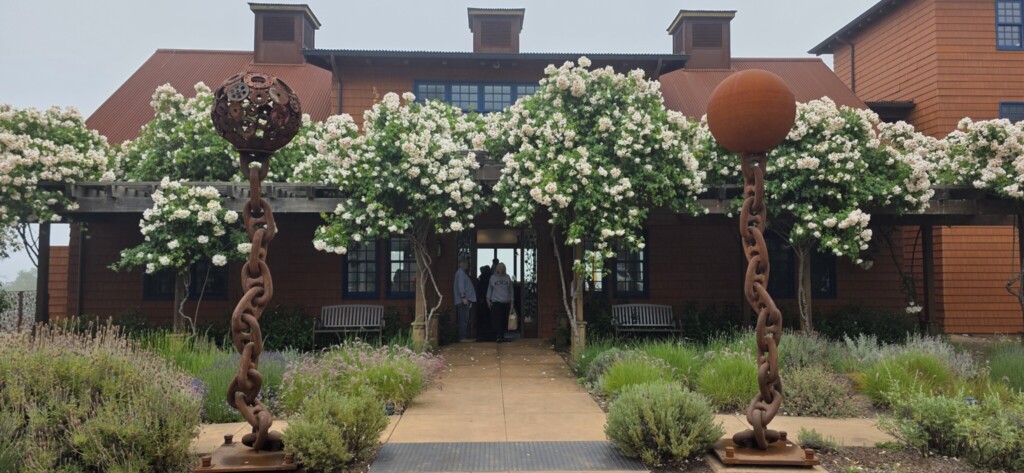
Linda and Lester Schwartz, originally from South Africa, brought a vision of farming and winemaking to this windswept land. Despite early skepticism, including one professor who insisted that nothing would grow here, their gamble paid off. The vineyard became defined not only by climate and soils, but by its elevation and exposure, producing fruit of rare intensity and freshness.
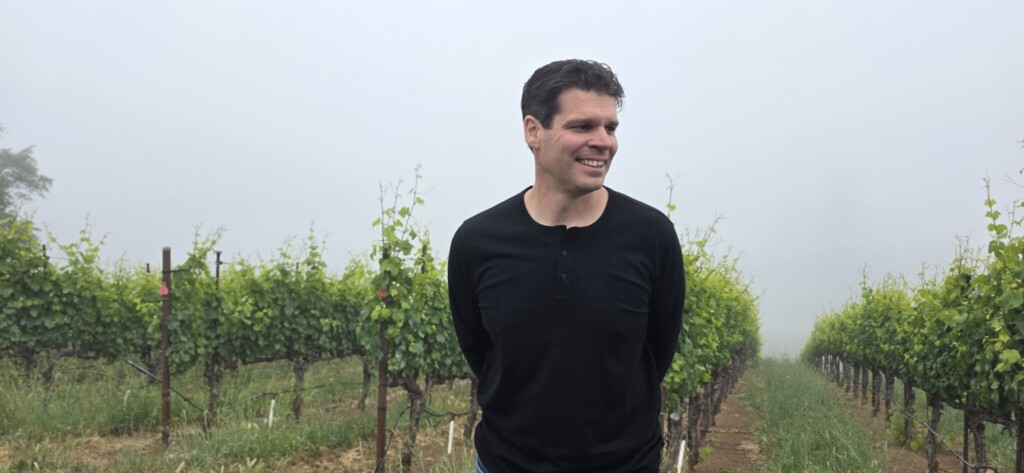
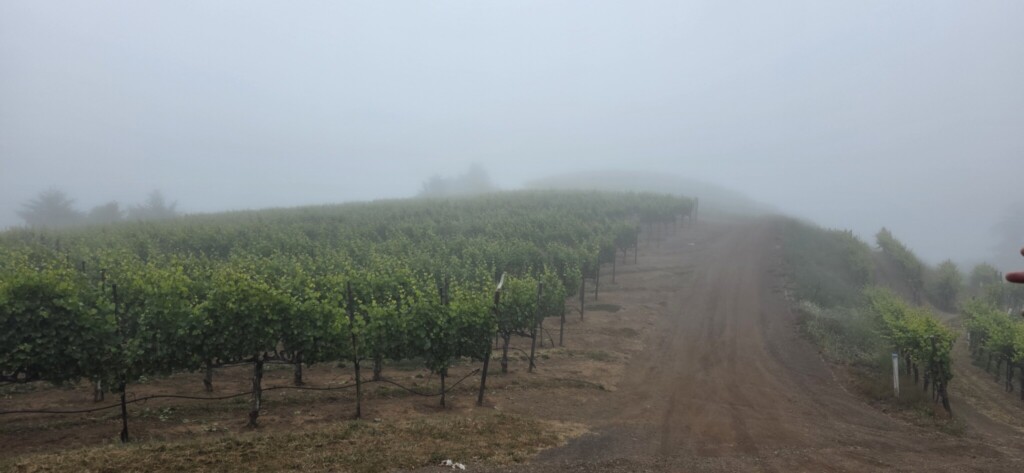
Winemaker Jeff Pisoni met us outside. As we stood in the wet, cold fog, we could barely see the vines in front of us. The vineyards stand on steep, decomposed sandstone slopes where thick fog lingers low before lifting to reveal warm afternoon sun. Wet winters, dry summers, and nutrient-poor soils make farming challenging, but the Schwartz family, who planted vines here in the 1980s, embraced sustainability from the start, favoring organic herbicides over synthetics.
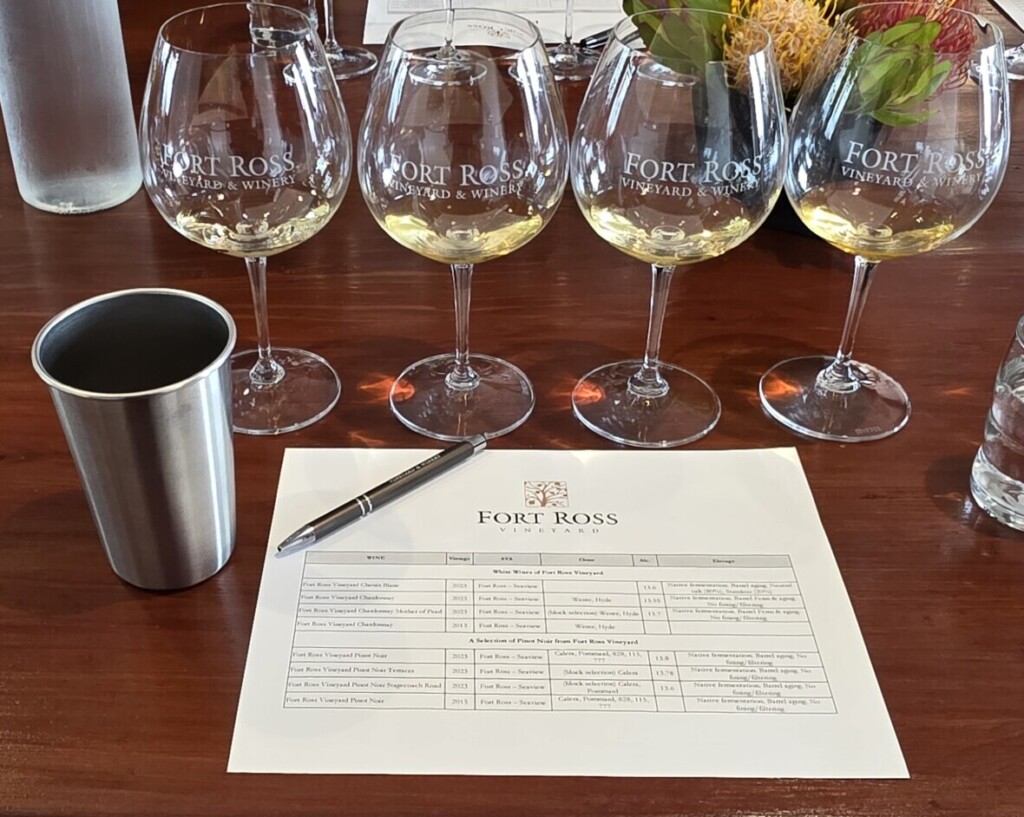
Drawn by Sonoma’s coastal terroir after years in Monterey, Jeff began working with the Schwartzes in 2009. Today, Fort Ross produces 7,000 to 8,000 cases annually from its 53-acre estate. In addition to Pinot Noir and Chardonnay, they produce Chenin Blanc and Pinotage, a nod to the family’s South African roots.
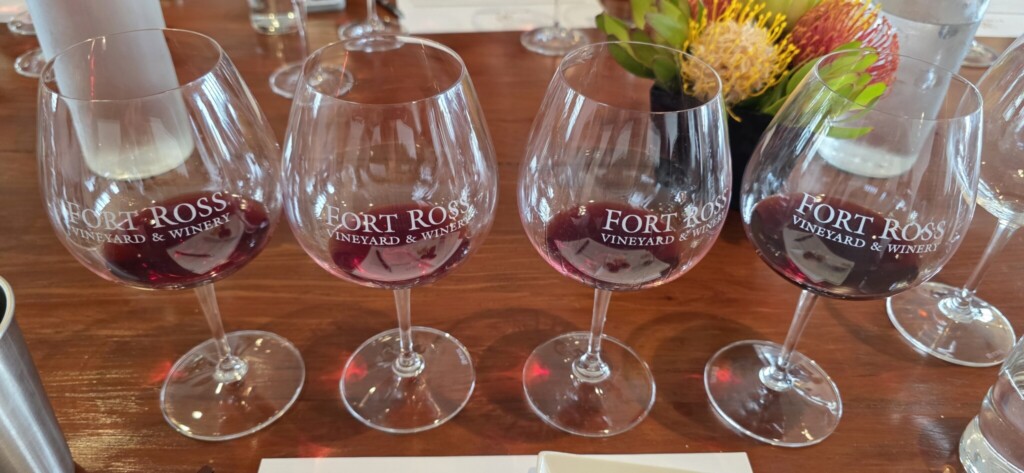
The wines reflect the place: bright acidity, fine-grained tannins, and a freshness from the elevation, ocean air, and low-yielding vines. Fort Ross-Seaview is a reminder of Sonoma’s extraordinary range of microclimates, where perseverance and passion meet nature’s challenge to craft wines with a distinct coastal identity.
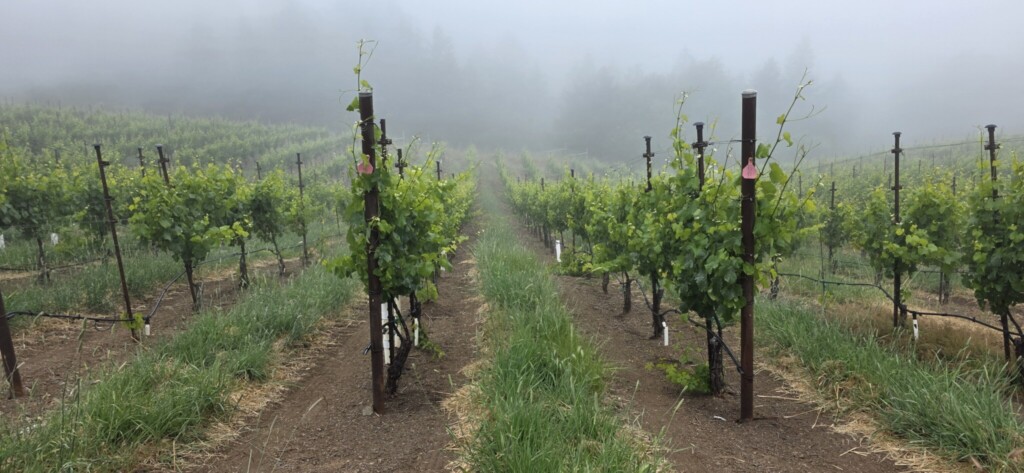
As we left the winery, we could see that the fog was slowly starting to lift, just in time for the afternoon sun to help the grapes continue to ripen on the vines.
Discover more from Please The Palate
Subscribe to get the latest posts sent to your email.