

26 Aug Caiarossa Revisited: From First Encounter to the Heart of the Tuscan Coast
When I first tasted Caiarossa wines in 2016, it was across a table in Los Angeles with French-born winemaker Dominique Génot and a lineup of wines that blended Tuscan soul with French polish. I remember ending the story I wrote with a wish that one day I hoped to stand among the vines in Riparbella and see the place that shaped them. This summer, that wish came true.
History of Caiarossa
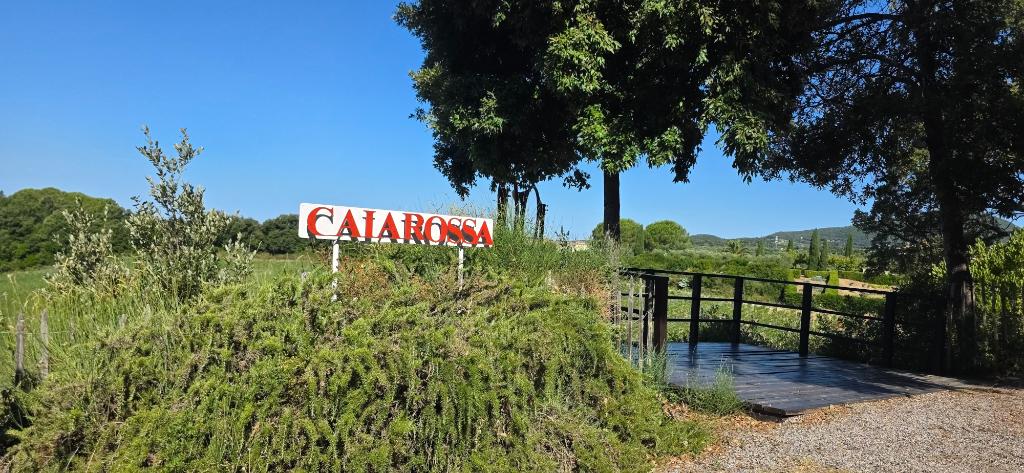
Caiarossa was founded in 1998 on the rolling hillsides of Riparbella, at Podere Serra All’Olio, a 100-hectare estate nestled in a region owned for centuries by the powerful De Medici family. From the start, Caiarossa set out to be different, embracing biodynamic principles as a core philosophy, while combining that respect for nature with the highest levels of professional winemaking to bring out the true character and vitality of this extraordinarily diverse terroir.
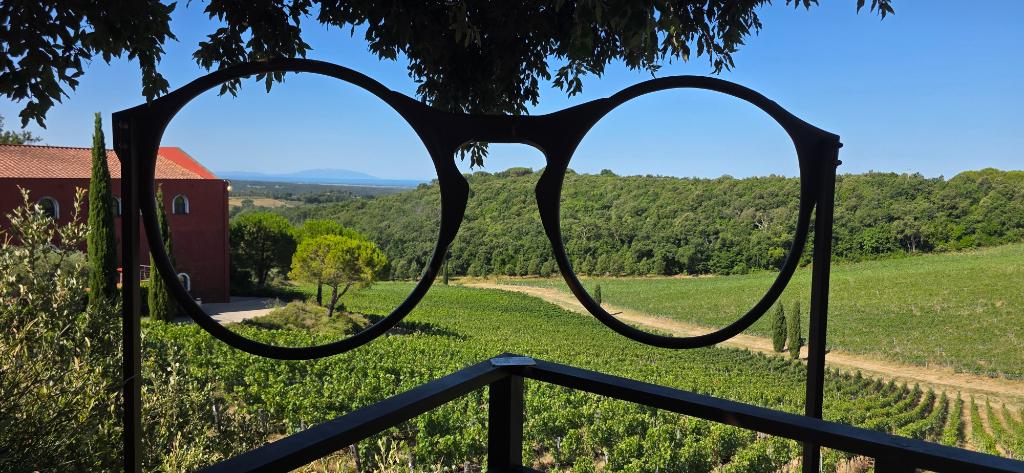
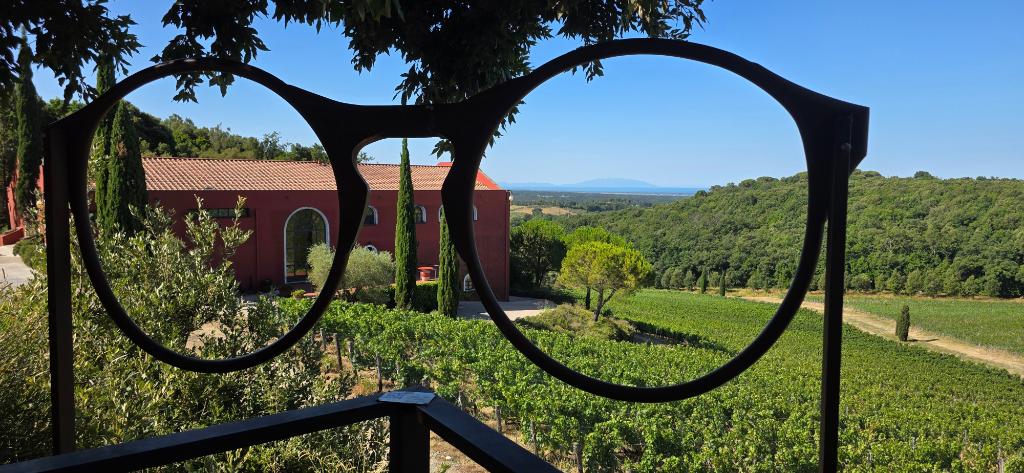
In 2004, Eric Albada Jelgersma acquired the estate while seeking an Italian counterpart to his historic Bordeaux property, Château Giscours in Margaux. Deeply impressed by the region’s energy, fertility, and potential, he committed to nurturing Caiarossa’s growth while honoring its founding vision. Today, the estate spans 100 hectares, 40 planted to vines, 34 to forest, 20 to wildflower meadows, and 6 to olive groves. After Eric’s passing, a large sculpture of his signature eyeglasses was placed in his favorite spot on the property, inviting visitors to see Caiarossa through his eyes and share his love for this magical place. His children Valérie, Derk, and Dennis continue to steward the estate with passion, deepening the family’s relationship to the land and its legacy.
Caiarossa remains a unique entity that celebrates its own terroir, as reflected in its name. “Caia” pays homage to Gaia, the Earth goddess, and “rossa” for the red soils that define the area. The estate’s iconic logo features the head of Dionysus, the Etruscan god of wine and fertility, from a statue found near Volterra and acquired by Eric before he took the helm at Caiarossa. This symbol embodies the estate’s deep connection to both art and nature, heritage and renewal.
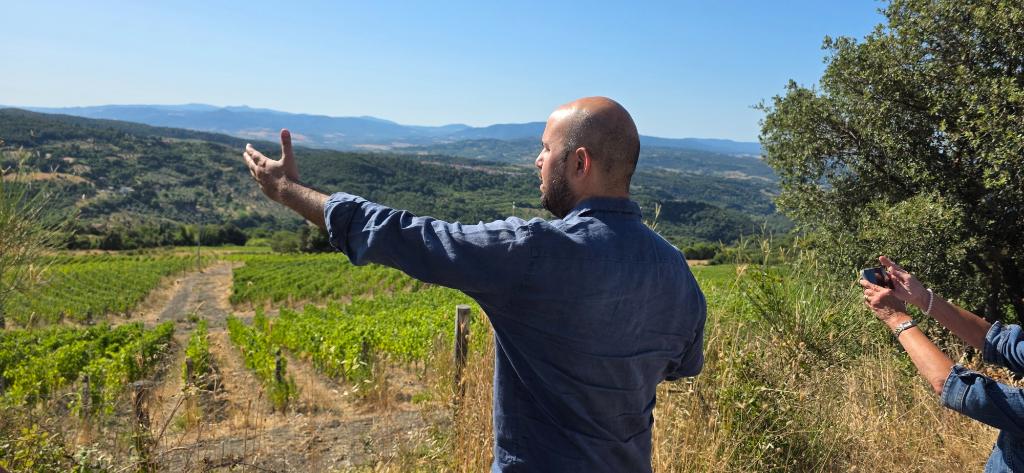
Vineyards of Caiarossa
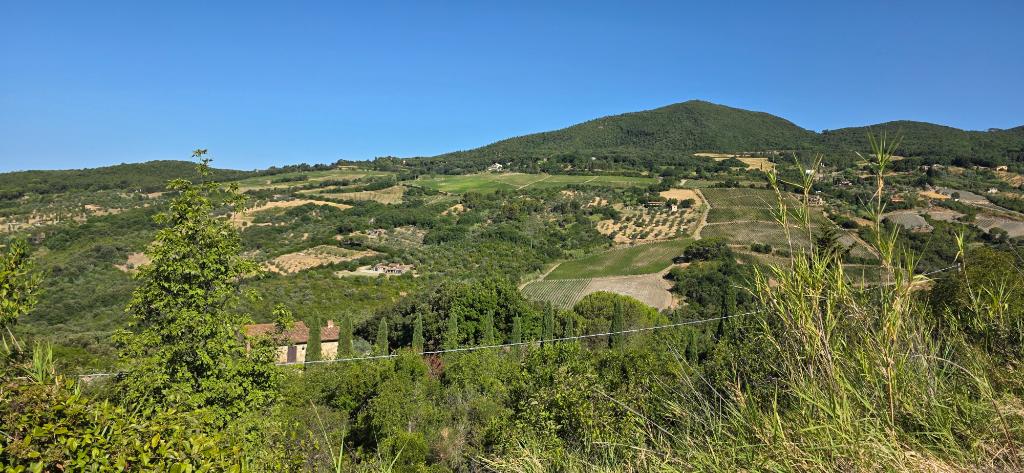
When I visited Caiarossa, I was captured by the scale and serenity of the estate. The 40 hectares of vines are divided into 59 parcels across varied soils: iron-rich diasporo stones, clay, calcareous marl, shale, and ancient sandy seabeds. From the highest vineyard at Nocolino, on the slope of Monte di Nocola at 350 meters above sea level, the islands of Elba and Capraia shimmer offshore. Nocolino is home to the youngest vines, planted between 2008 and 2013. Podere Serra All’Ollio, planted in 1998, is the most historic part of the Caiarossa vineyards and sits at 220 meters above sea level. Podere Le Lame, a 2.5 hectares property, is the easternmost vineyards, sitting at 160 meters above sea level.
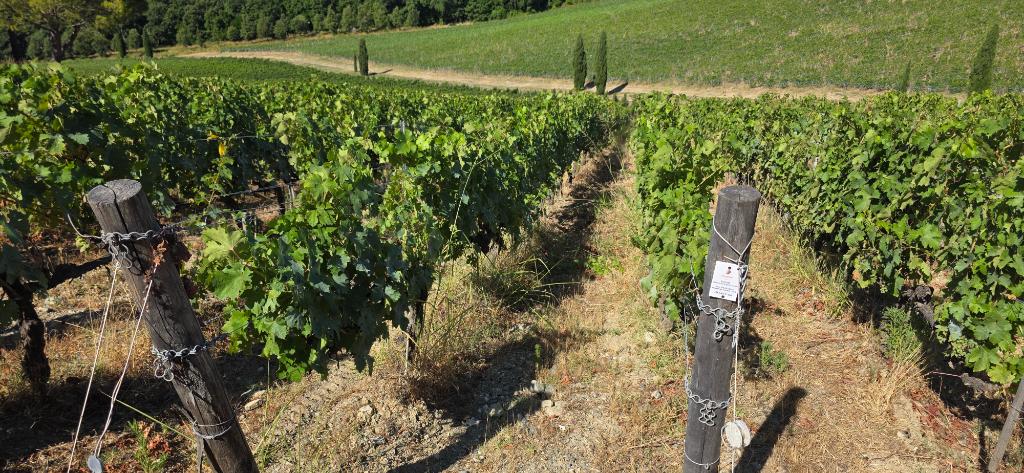
Between the vines, olive groves, wild herbs, cypress, and Mediterranean scrub knit the landscape into a vibrant ecosystem that also produces olive oil, vegetables, and honey.
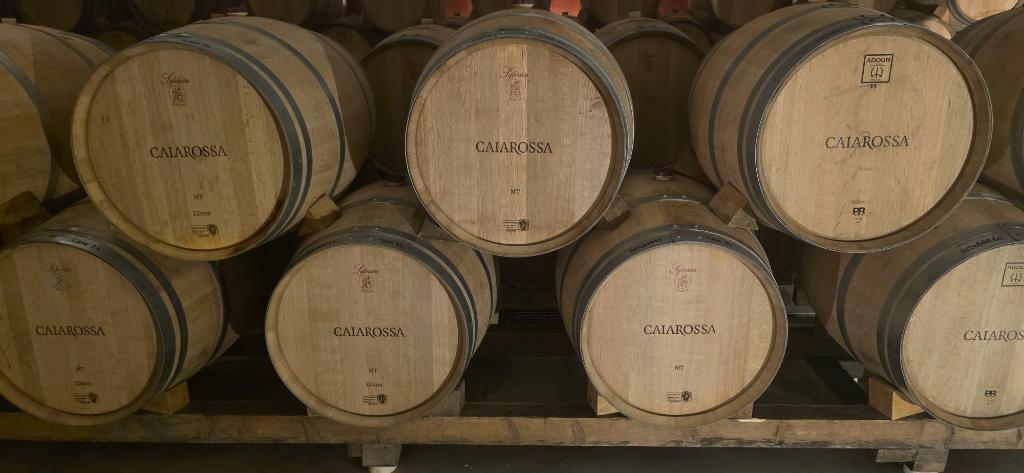
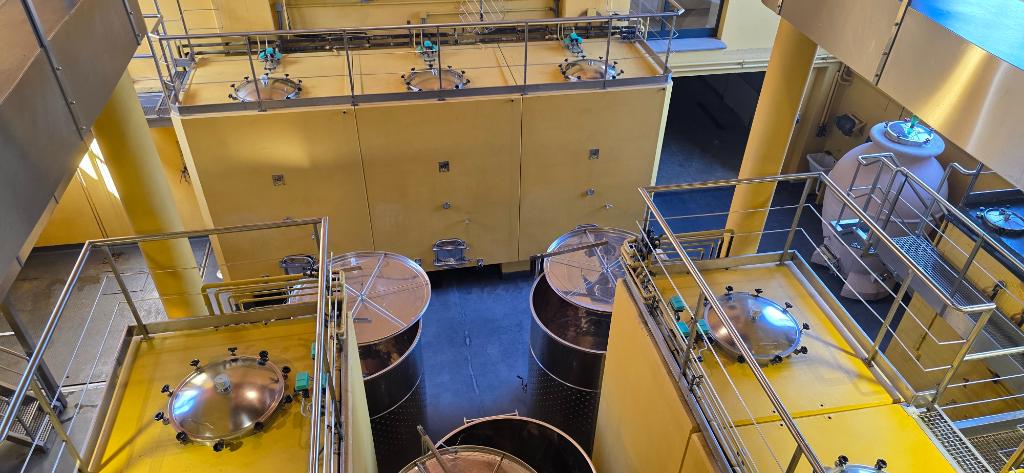
The winery itself remains a quiet marvel of intention. Built into the hillside on four gravity-fed levels, it follows principles of Feng Shui and geobiology. Yellow interior walls draw in sunlight, red exterior walls echo the soil, and the structure’s position balances sunlight, slope, and energy flow. An opening in the barrel cellar connects directly to the earth beneath, while the design naturally regulates temperature and minimizes energy use.
Caiarossa Wines
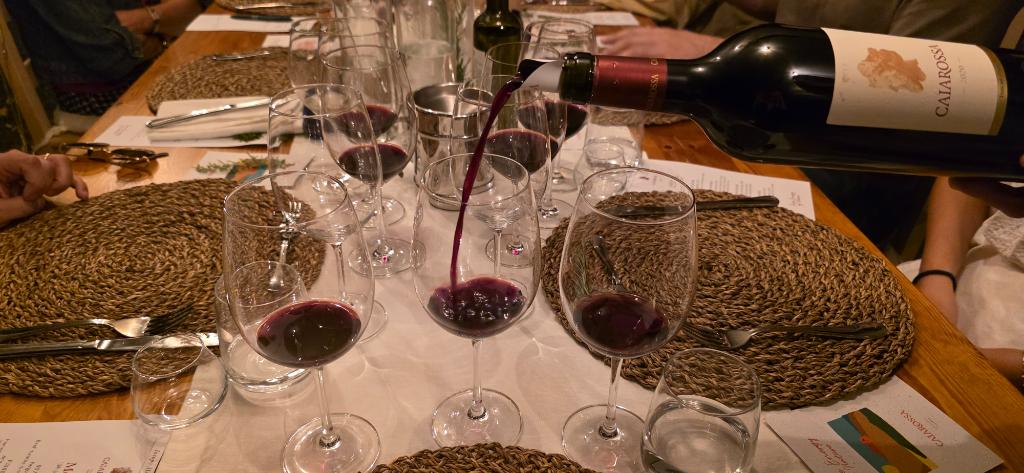
The three primary wines of Caiarossa are Pergolaia, Aria di Caiarossa, and Caiarossa.
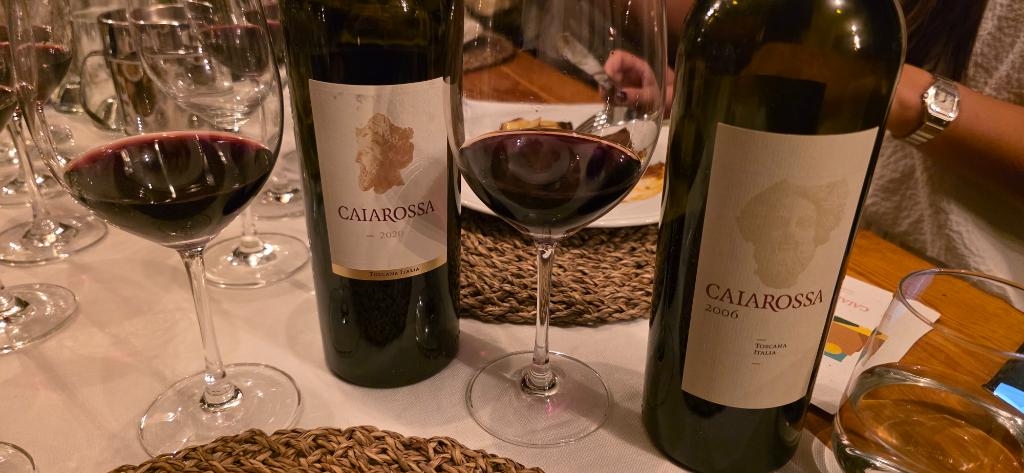
Pergolaia is made with 80% Sangiovese blended with Cabernet Sauvignon and Merlot. The Sangiovese is from parcels facing the sea. Sitting on the hills six miles from the sea, the wind hits the vineyards first resulting in a wine with savory freshness and elegance. Aria di Caiarossa is made from a selection of grapes (Syrah, Cabernet Sauvignon, Cabernet Franc, Merlot, and Grenache) from the Nocolino vineyard, aged for 13 months in French oak (15% new). The wine offers red fruit aromas with high acidity and salinity. Caiarossa, the flagship wine, represents the entire property and is a blend of all seven red grapes (Cabernet Sauvignon, Cabernet Franc, Merlot, Syrah, Sangiovese, Petit Verdot, and Grenache (which was pulled out in 2023). Aged for 14 months in 25-30% new oak, this is is a wine of depth and complexity.
A Sensory Experience
One of the highlights of this trip was a sensory workshop in collaboration with Source Adage, a fragrance shop in Riparbella founded by owners Christopher Draghi and Robert Dobay. At Source Adage, Christopher and Robert create their own line of unisex eau de perfumes and home scents, as well as candles and room diffusers.
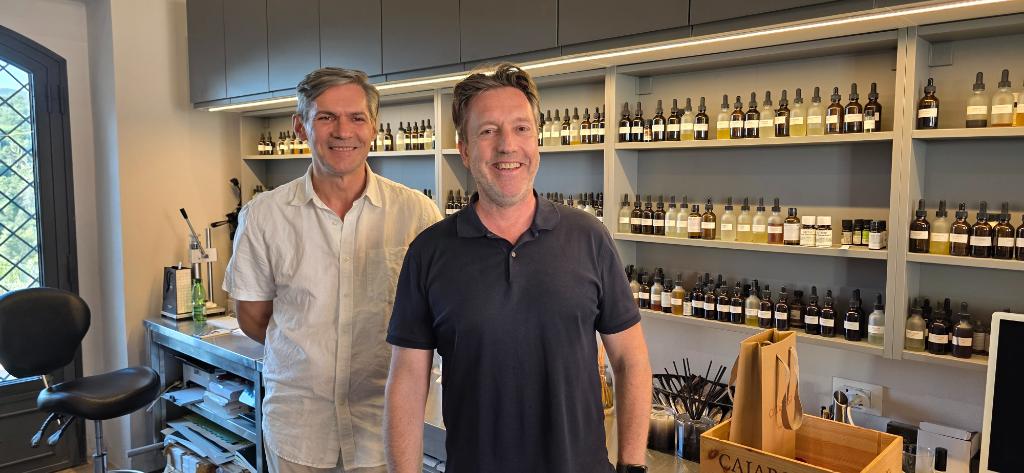
Caiarossa and Source Adage did a special collaboration between fragrance and wine, capturing the scent of the Mediterranean landscape. The all-natural fragrance was inspired by the breathtaking location of Caiarossa in the Tuscan hills overlooking the seaside. The hand-blended limited scent is a blend of pure essential oils of laurel leaf, cedar, pine, rosemary, mastic, cypress, lavender, sage, geranium, myrtle, citrus blossom, and wild fennel, the very plants that grow around the vines.
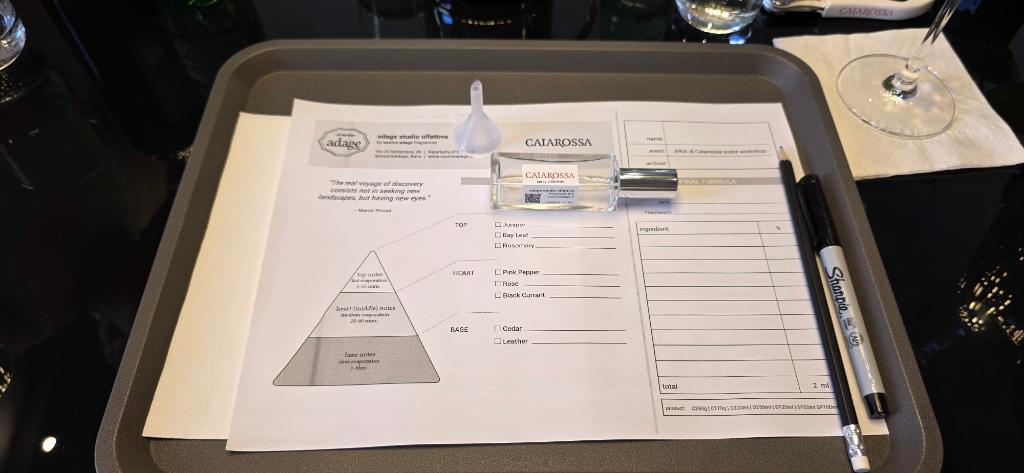
On our visit, we got to participate in our own workshop and, using the same essences, we crafted our own personal blends to bring a piece of Caiarossa home. And, as I enjoy the fragrance in my home, I am taken back to my visit to Caiarossa, standing on the platform, looking through Eric Albada Jelgersma’s glasses onto the vineyard and winery.
Read the original story I wrote for the Napa Valley Register in 2016: Caiarossa: Italian Wine with a French Winemakers Touch
Discover more from Please The Palate
Subscribe to get the latest posts sent to your email.