• All
  • *
  • Cocktails
  • Food
  • Lifestyle
  • Podcasts
  • Syndicate
  • Travel
  • Uncategorized
  • Videos
  • Wine
Of course when you think about the Willamette Valley in Oregon, you likely think of it as a land of Pinot Noir. Pinot Noir definitely reigns in the region and as a likely partner, Chardonnay is also planted and well-regarded in the Willamette Valley. But, the Willamette Valley is far more diverse than you might think it is and there are a number of producers who are working with other grape varieties and these grapes are well-suited to the region. I explored some of these grapes in my column in the Napa Valley Register, which you can read here.
Say ‘Napa’ and people think Cabernet Sauvignon. Say ‘Burgundy’ and people think Pinot Noir and Chardonnay. Say ‘Piedmont’ and people think Nebbiolo. Say ‘Oregon’ and people think Pinot Noir.
It is easy to think of the Willamette Valley in Oregon as one large Pinot Noir-producing region. After all, of the 24,436 acres* of vineyards, 16,536 acres* are planted to Pinot Noir. At the same time Pinot Noir was planted in the 1970s, Chardonnay was also planted. The Willamette Valley shares the same latitude as Burgundy, so it makes sense that if Pinot Noir is suited for the Willamette Valley, so is Chardonnay. However, there are only 1,941 acres* planted to Chardonnay.
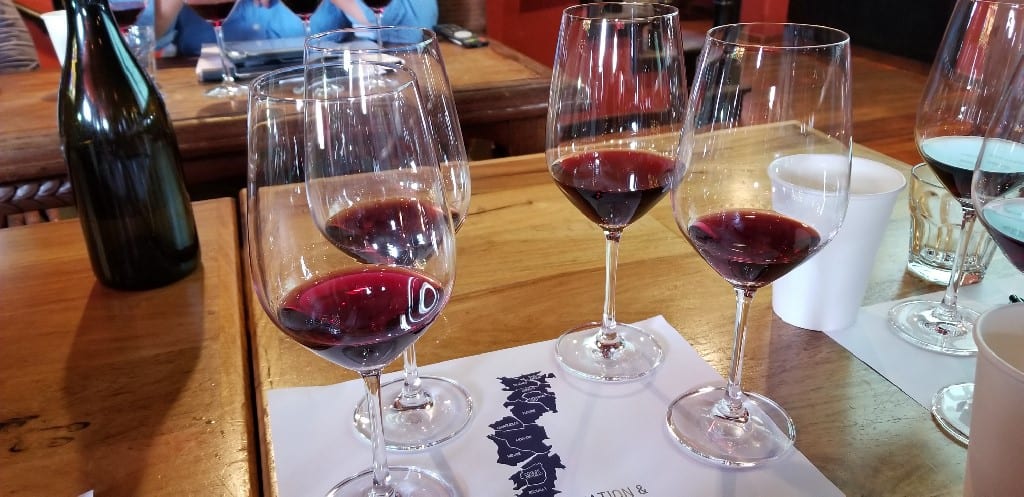
November is here and that means Thanksgiving is around the corner. Looking for the perfect wine to enjoy with your Thanksgiving meal? Try a Beaujolais. Not a Beaujolais Nouveau but one from one of the Crus of Beaujolais, which I wrote about in my recent column in the Napa Valley Register and you can read here.
Have you been waiting for November to drink Beaujolais? I hope not!

Beaujolais is so much more than the Beaujolais Nouveau released each November, just after harvest and just in time for Thanksgiving dinner. But if you have been waiting for November to drink Beaujolais, it is time to get serious about Beaujolais.

There are different styles of Beaujolais that will satisfy all palates, styles and desires. And Beaujolais prices are affordable. So, when you cannot afford to spend hundreds of dollars on a bottle of Burgundy, a bottle of Beaujolais will satisfy.

Beaujolais is located immediately south of Burgundy. While it is sometimes considered a part of Burgundy, it is not. Unlike Burgundy, which grows Pinot Noir, the grape of Beaujolais is Gamay. Gamay is not the shallow one-dimensional grape you might think it is but rather a grape that will charm and has the power to seduce.

Copied!